

Boston Fern Indoor: Complete Care Guide for 2026
The boston fern indoor plant has experienced a remarkable resurgence in 2026, transforming from a traditional grandmother's favorite into one of the most sought-after houseplants for modern homes. This graceful plant, scientifically known as Nephrolepis exaltata, brings cascading fronds of vibrant green foliage that instantly soften any interior space while offering impressive air-purifying qualities. Whether you're an experienced plant parent or just beginning your indoor gardening journey, understanding the specific needs of this classic beauty will help you maintain its lush, healthy appearance year-round. When properly cared for, a boston fern can become a stunning focal point in your home, adding texture, movement, and life to rooms that need a botanical boost.
Understanding Boston Fern Indoor Requirements
Boston ferns differ significantly from many popular houseplants in their care requirements, making it essential to understand their native habitat before bringing one home. These plants originated in tropical regions where they grew as epiphytes in humid, shaded forest environments.
Key environmental factors for success:
- Consistent humidity levels between 50-80%
- Indirect, filtered light with no direct sun exposure
- Temperatures ranging from 60-75°F
- Well-draining, moisture-retentive soil
- Regular watering to maintain even soil moisture
The resurgence of Boston ferns as trendy houseplants reflects growing interest in plants that offer both aesthetic appeal and functional benefits. Divine Roots recognizes this trend and sources healthy specimens directly from greenhouse environments, ensuring they arrive ready to thrive in your home.
Understanding that boston fern indoor care centers around replicating tropical conditions helps explain why these plants excel in certain rooms while struggling in others. The bathroom, for instance, often provides ideal conditions due to natural humidity from showers and typically lower light levels.
Light Requirements for Optimal Growth
Proper lighting represents one of the most critical factors in successful boston fern indoor cultivation. These plants evolved beneath forest canopies, where they received dappled, filtered light rather than direct sun exposure.
Place your boston fern indoor near north-facing windows or several feet back from east or west-facing windows. Direct sunlight will scorch the delicate fronds, causing them to turn yellow or brown and lose their vibrant appearance. If you notice fronds developing crispy, brown edges, your plant likely receives too much direct light.
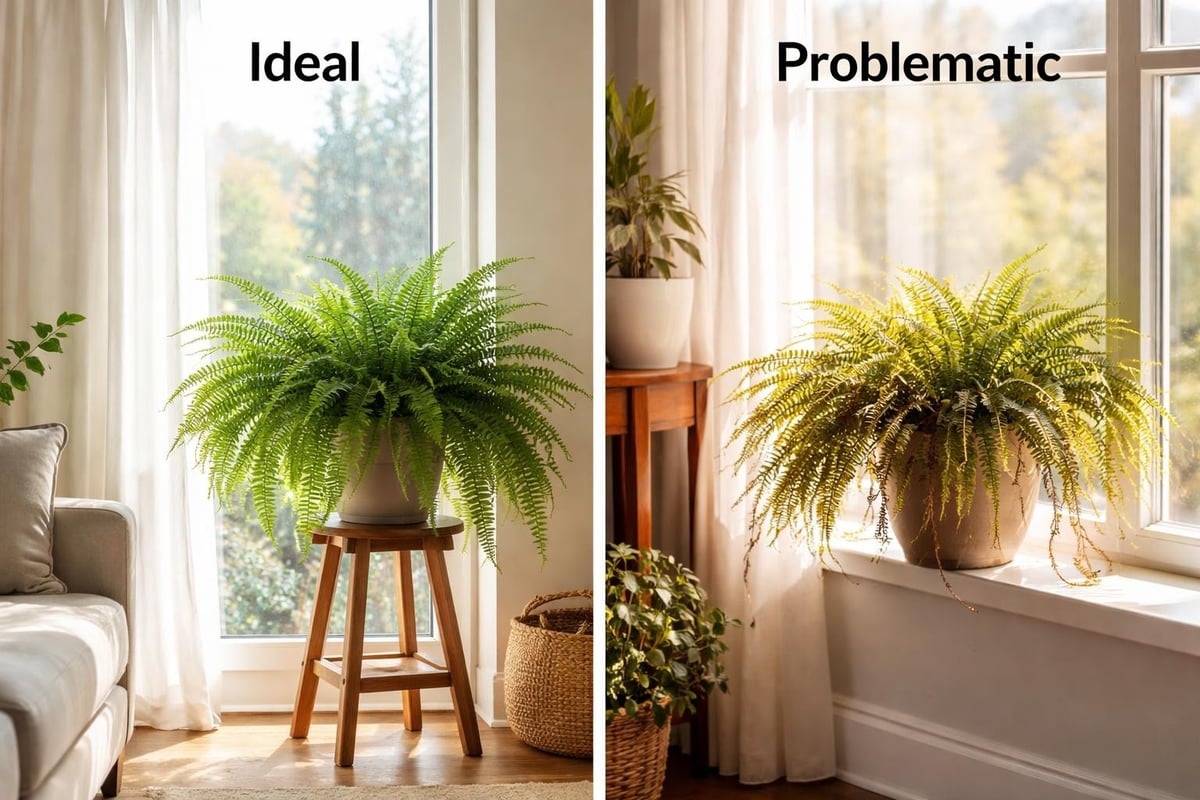
Conversely, insufficient light causes boston ferns to produce sparse, pale growth with elongated fronds that lack the characteristic full, bushy appearance. If your home lacks ideal natural light conditions, consider supplementing with grow lights positioned 12-18 inches above the plant for 12-14 hours daily.
For those exploring easy-care indoor plants for beginners, it's worth noting that boston ferns require more attention than some alternatives, but their stunning visual impact justifies the effort.
Watering Your Boston Fern Indoor Plant
Watering represents perhaps the most challenging aspect of boston fern indoor care, as these plants demand consistency while being intolerant of both drought and waterlogging. The goal is maintaining evenly moist soil without allowing it to become saturated.
Check soil moisture daily by inserting your finger one inch deep into the soil. If it feels dry at this depth, water thoroughly until excess drains from the bottom. During active growth periods in spring and summer, most boston ferns require watering every 2-3 days, while winter watering may extend to every 4-5 days.
Warning signs of watering issues:
- Underwatering: Brown, crispy fronds; leaf drop; soil pulling away from pot edges
- Overwatering: Yellowing fronds; musty soil odor; soggy soil texture; root rot
The quality of water matters significantly for boston fern indoor health. These plants are sensitive to chemicals commonly found in tap water, including chlorine, fluoride, and dissolved salts. When possible, use filtered water, rainwater, or tap water that has sat out for 24 hours to allow chlorine to dissipate.
Temperature affects watering frequency substantially. During hot summer months or in homes with dry heating systems, your boston fern may require more frequent watering. Conversely, cooler temperatures and shorter days in winter reduce water needs.
Creating Ideal Humidity Conditions
Humidity stands as the single most important factor distinguishing successful boston fern indoor growers from those who struggle. These tropical natives require atmospheric moisture levels that far exceed what most homes naturally provide, especially during winter months when heating systems dry the air.
| Humidity Method | Effectiveness | Maintenance | Best For |
|---|---|---|---|
| Humidifier | Excellent | Low | Multiple plants or whole rooms |
| Pebble tray | Moderate | Low | Individual plants |
| Daily misting | Minimal | High | Supplementary moisture only |
| Bathroom placement | Excellent | None | Single plants, appropriate lighting |
| Grouping plants | Good | None | Creating microclimates |
Investing in a quality humidifier provides the most reliable solution for maintaining adequate moisture levels around your boston fern indoor plant. Position the humidifier near your plant and aim for relative humidity between 50-80%. Digital hygrometers, available inexpensively at most home stores, help monitor humidity levels accurately.
Boston ferns excel in bathrooms where natural humidity from showers creates ideal growing conditions. However, ensure your bathroom receives adequate light before relocating your fern there.
Misting offers minimal benefit despite its popularity. While it temporarily increases humidity around fronds, the effect dissipates within minutes and doesn't address the plant's need for consistent atmospheric moisture. Additionally, frequent misting can promote fungal issues if done in evening hours when water doesn't evaporate quickly.
Temperature Considerations
Boston fern indoor plants prefer consistent temperatures between 60-75°F, with nighttime temperatures slightly cooler than daytime. Avoid placing your fern near heating vents, air conditioning units, drafty windows, or exterior doors where temperature fluctuations occur.
Temperatures below 50°F cause significant stress, leading to frond damage and potential plant death. Similarly, temperatures exceeding 80°F combined with low humidity create conditions where the plant struggles to maintain adequate moisture in its foliage.

Soil and Fertilization Requirements
The right soil mixture provides the foundation for healthy boston fern indoor growth. These plants require a medium that retains moisture while simultaneously draining excess water to prevent root rot. A quality potting mix designed for ferns or African violets typically works well.
Ideal soil composition:
- 2 parts peat moss or coco coir
- 1 part perlite or vermiculite
- 1 part compost or worm castings
- Small amount of orchid bark for drainage
Divine Roots ships plants in optimized soil blends, but when repotting becomes necessary, recreating these conditions ensures continued health. Avoid heavy garden soils or mixes designed for cacti and succulents, as these don't retain adequate moisture.
Boston fern indoor plants benefit from regular feeding during active growth periods. Apply a balanced, water-soluble fertilizer diluted to half strength every 2-4 weeks from April through September. Reduce or eliminate fertilization during winter months when growth naturally slows.
Over-fertilization causes more problems than under-fertilization. Excess nutrients accumulate as salts in the soil, damaging roots and causing frond burn. If you notice white crusty deposits on the soil surface or pot edges, flush the soil thoroughly with water to remove salt buildup.
Common Problems and Solutions
Even experienced plant parents encounter challenges when growing boston fern indoor plants. Recognizing problems early and understanding their causes enables quick intervention before significant damage occurs.
Frond Drop and Browning
The most common complaint among boston fern owners involves fronds turning brown or dropping entirely. Multiple factors contribute to this issue, often in combination.
Low humidity causes most frond browning, particularly affecting frond tips and edges first. If browning progresses from the outside in, insufficient atmospheric moisture is the likely culprit. Increasing humidity through the methods discussed earlier typically resolves this issue within a few weeks as new growth emerges.
Inconsistent watering, whether too much or too little, also triggers frond loss. Boston ferns respond to stress by sacrificing older fronds to preserve newer growth and root health. For more guidance on maintaining healthy plants, explore resources on how indoor plants improve health and well-being.
Pest Management
Boston fern indoor plants occasionally attract pests, though they're less susceptible than many houseplants. Common invaders include spider mites, mealybugs, and scale insects.
Spider mites thrive in dry conditions, appearing as tiny specks on frond undersides and leaving fine webbing. These pests indicate insufficient humidity. Increase moisture levels, isolate the affected plant, and spray thoroughly with insecticidal soap or neem oil every 5-7 days until eliminated.
Fungus gnats occasionally appear in boston fern soil due to consistently moist conditions. While annoying, they rarely harm the plant itself. Allow the top inch of soil to dry slightly between waterings and consider applying beneficial nematodes to eliminate larvae.
Placement Strategies for Success
Selecting the right location for your boston fern indoor plant dramatically impacts its long-term health and appearance. Certain spots in your home naturally provide better conditions than others.
Ideal placement locations:
- Bathroom with window: Natural humidity plus filtered light
- Kitchen near sink: Ambient moisture from cooking and washing
- Bright hallway: Indirect light without temperature extremes
- North-facing bedroom: Gentle light with stable temperatures
- Home office away from windows: Supplemented with grow lights
Understanding places to avoid is equally important. Never position boston ferns directly beside heating vents, air conditioners, fireplaces, or in rooms with poor air circulation. Similarly, avoid south-facing windowsills where direct afternoon sun will scorch delicate fronds.
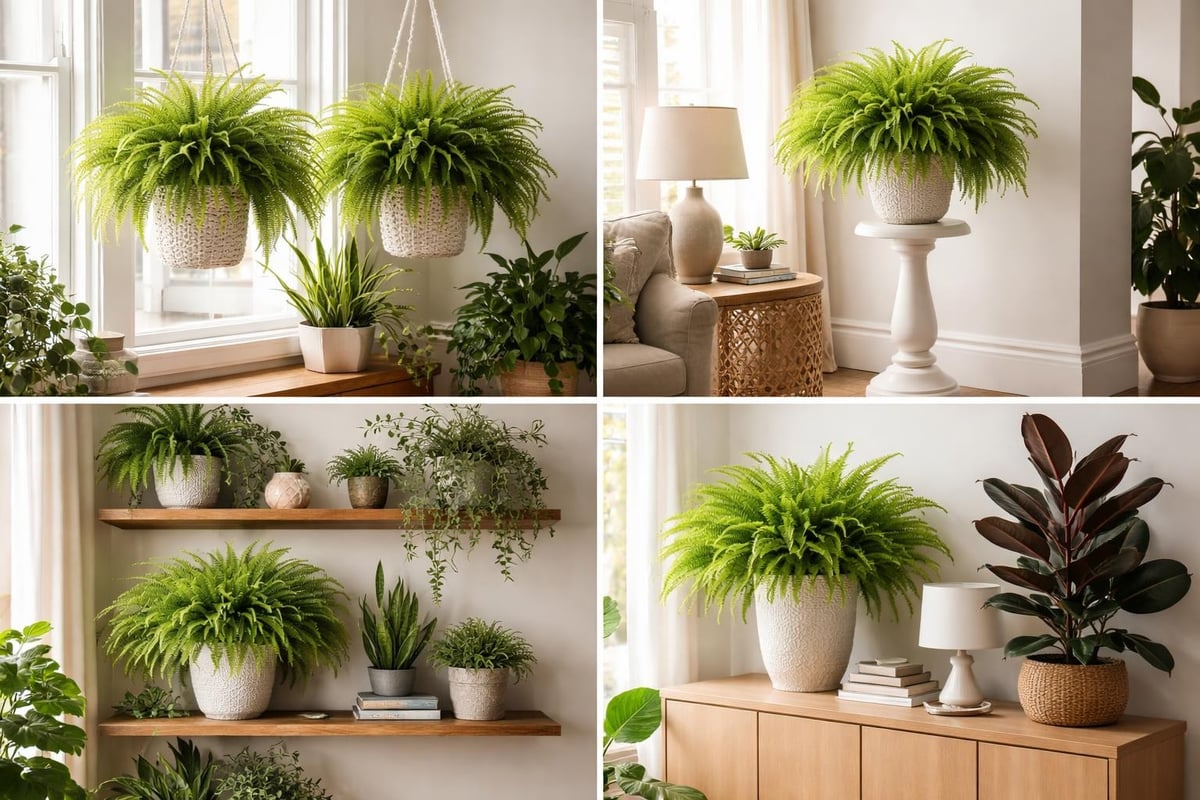
For those interested in creating a cozy indoor garden in small spaces, hanging baskets offer an excellent solution for displaying boston ferns. Elevated placement allows fronds to cascade naturally while potentially positioning the plant closer to better light sources.
Consider rotating your boston fern indoor plant quarterly to ensure even growth on all sides. Plants naturally grow toward light sources, and rotation prevents lopsided development.
Styling with Boston Ferns
The architectural quality of boston fern fronds makes them versatile design elements. Their soft, flowing appearance contrasts beautifully with plants featuring bold, structural leaves, creating visual interest through textural variety.
Pair boston ferns with modern planters that complement your interior style. Divine Roots offers contemporary containers that elevate the traditional appearance of these classic plants, making them feel fresh and current in 2026 interiors.
Propagation and Repotting
Boston fern indoor plants eventually outgrow their containers, requiring division and repotting every 2-3 years. This process also provides opportunities to propagate new plants for other locations or to share with friends.
Spring represents the ideal time for repotting, coinciding with the beginning of active growth when plants recover quickly from root disturbance. Choose a container only 2 inches larger in diameter than the current pot, as oversized containers retain excess moisture that can lead to root rot.
Division process:
- Water the plant thoroughly 24 hours before division
- Remove the entire root ball from its container
- Gently shake excess soil from roots
- Identify natural divisions in the root mass
- Use a clean, sharp knife to separate sections
- Plant each division in fresh, appropriate soil
- Water thoroughly and maintain high humidity during recovery
Each division should contain several healthy fronds and a substantial root system. Smaller divisions take longer to establish and may struggle initially. For air-purifying indoor plants like boston ferns, maintaining multiple specimens throughout your home maximizes air quality benefits.
Some growers attempt propagation through spores found on frond undersides, though this method requires patience and controlled conditions. Division remains the most reliable propagation method for home gardeners.
Seasonal Care Adjustments
Boston fern indoor care requirements shift throughout the year as natural light levels, temperature, and humidity fluctuate with seasons. Adapting your care routine ensures year-round health.
Spring and Summer Care
Active growth periods require more frequent watering, regular fertilization, and heightened attention to humidity. This is also the time to repot if needed and to move plants to brighter locations if they've spent winter in lower light conditions.
Monitor for pests more carefully during warm months when reproduction rates accelerate. Early detection prevents minor infestations from becoming serious problems. For comprehensive information on addressing plant health issues, the plant care blog offers valuable resources.
Fall and Winter Adjustments
Shorter days and lower light levels naturally slow growth, reducing water and fertilizer needs. However, indoor heating systems dramatically decrease humidity, often creating the year's most challenging growing conditions.
Increase humidification efforts during winter months while reducing watering frequency. Watch for cold drafts near windows and doors, which can damage fronds overnight even if daytime temperatures remain acceptable.
Some frond loss during winter is natural and shouldn't cause alarm. The plant conserves energy by shedding older growth, which will be replaced when spring arrives and growth resumes.
Troubleshooting Advanced Issues
Beyond common problems, boston fern indoor plants occasionally develop more complex issues requiring targeted solutions.
Root Rot Recognition and Treatment
Root rot develops when soil remains consistently waterlogged, depriving roots of oxygen and encouraging fungal growth. Symptoms include yellowing fronds, wilting despite moist soil, and a musty odor from the growing medium.
Address root rot by removing the plant from its container and inspecting roots. Healthy roots appear white or tan and feel firm. Rotted roots appear dark brown or black and feel mushy. Trim away all affected roots with sterilized scissors, repot in fresh soil, and adjust watering practices.
For guidance on treating fungus and mold, additional resources can help prevent recurrence.
Stunted Growth
If your boston fern indoor plant produces minimal new growth despite appropriate care, several factors may be responsible. Pot-bound roots restrict growth, as does nutrient deficiency from infrequent fertilization or depleted soil.
Check whether roots circle the pot's interior or emerge from drainage holes. If so, division and repotting will reinvigorate growth. If the plant hasn't been fertilized regularly, resume feeding with diluted liquid fertilizer.
Insufficient light also limits growth, though this typically manifests as sparse, pale fronds rather than complete growth cessation. Evaluate your plant's location and adjust if necessary.
Selecting Your Boston Fern
When choosing a boston fern indoor plant, selecting a healthy specimen gives you the best chance of long-term success. Look for plants with vibrant green fronds, dense growth, and no signs of pests or disease.
Quality indicators:
- Multiple healthy fronds emerging from the center
- Consistent green coloration without yellowing
- No brown or crispy frond edges
- Moist but not waterlogged soil
- No visible pests or webbing
- Roots visible at drainage holes but not severely pot-bound
Divine Roots carefully selects and ships plants directly from greenhouse environments, ensuring they arrive in optimal condition. This direct-from-greenhouse approach minimizes stress and acclimation challenges common with plants that have passed through multiple distribution points.
For those building a diverse collection, explore low-light plants and easy-care options that complement boston ferns while offering varied care requirements and appearances.
Successfully growing a boston fern indoor requires attention to humidity, consistent watering, and appropriate lighting, but the effort rewards you with a lush, cascading display that purifies air while adding natural beauty to your home. Whether you're expanding an existing collection or purchasing your first fern, Divine Roots delivers healthy, greenhouse-grown plants and modern planters directly to your door, giving you the perfect foundation for indoor gardening success.
🌿 Related Reading
- Hanging Plants Indoor
- Air Purifying Indoor Plants
- How to Care for Spider Plant
- How to Care for Tradescantia
About the author
Written and reviewed by Robert, Founder of Divine Roots — he grows, propagates and ships the plants we sell, and the care advice here reflects what actually works in our own greenhouse.
Related guide: Boston fern brown tips: 10 causes and how to fix each one
Related guide: asparagus fern care (a drought-tolerant fern look-alike)
Frequently Asked Questions
How do I keep a Boston fern alive indoors?
Give it bright indirect light, keep the soil evenly moist at all times, and hold humidity above 50 percent. Boston ferns fail indoors almost entirely because of dry air and letting the rootball dry out completely, which browns fronds that never recover.
Why is my Boston fern turning brown and crispy?
Crispy brown fronds mean the air is too dry, the soil dried out, or the plant is sitting near a heat source or draft. Move it away from vents, water more consistently, and run a humidifier. Trim dead fronds at the base to encourage fresh growth.
How often should I water a Boston fern?
Usually every two to four days in summer and every five to seven days in winter, but check daily rather than following a schedule. The soil should feel like a wrung-out sponge: never dust dry, never waterlogged. Small pots and warm rooms dry out fastest.
Do Boston ferns need direct sunlight?
No. They want bright indirect light, such as near a north or east window or a few feet back from a brighter one. Direct sun scorches the delicate fronds within days, while deep shade produces sparse, weak growth and yellowing older fronds.
Should I mist my Boston fern?
Misting raises humidity for only twenty or thirty minutes, so it is not a real solution. Use a humidifier, a pebble tray, or group plants together instead. A bathroom with a window is often the best room in the house for a Boston fern.
Are Boston ferns safe for cats and dogs?
Yes. Boston ferns are non-toxic to cats and dogs and are one of the safest choices for pet households. Cats may still chew the fronds and vomit from the fibre itself, so hanging baskets protect both the pet's dignity and the plant's shape.
Share