

Lucky Bamboo Care Guide: Growth, Meaning & Display Tips
Lucky bamboo has become one of the most popular indoor plants for homes and offices across America, combining aesthetic appeal with deep cultural significance. Despite its name, this resilient plant isn't actually bamboo at all but rather a member of the Dracaena family. Its graceful stalks and vibrant green leaves make it an ideal choice for plant enthusiasts seeking low-maintenance greenery that thrives in various indoor conditions. Whether you're drawn to its Feng Shui symbolism or simply appreciate its architectural form, understanding how to care for and display this versatile plant will help you enjoy its beauty for years to come.
Understanding Lucky Bamboo Characteristics and Origins
Lucky bamboo (Dracaena sanderiana) originates from the tropical rainforests of Central Africa, though it has become deeply associated with Asian culture and traditions. The plant earned its common name due to its resemblance to true bamboo and its prominent role in Feng Shui practices that enhance positive energy within living spaces.
Botanical Classification and Growth Patterns
This evergreen perennial grows naturally in shaded, humid environments where it can reach heights of several feet. In cultivation, lucky bamboo typically ranges from six inches to three feet tall, depending on growing conditions and variety. The plant features:
- Hollow, segmented stems that resemble bamboo canes
- Long, slender leaves that emerge from nodes along the stalk
- A root system that adapts to both water and soil environments
- Natural green coloration, though stalks can be shaped and trained
The plant's versatility makes it suitable for various display methods, from simple water-filled vases to elaborate soil-based arrangements. At Divine Roots, customers appreciate how lucky bamboo complements other tropical houseplants in their curated collections.
Essential Care Requirements for Healthy Growth
Providing proper care ensures your lucky bamboo remains vibrant and continues growing steadily throughout the year. These plants are remarkably forgiving, making them excellent choices for beginners and experienced plant parents alike.
Light and Temperature Preferences
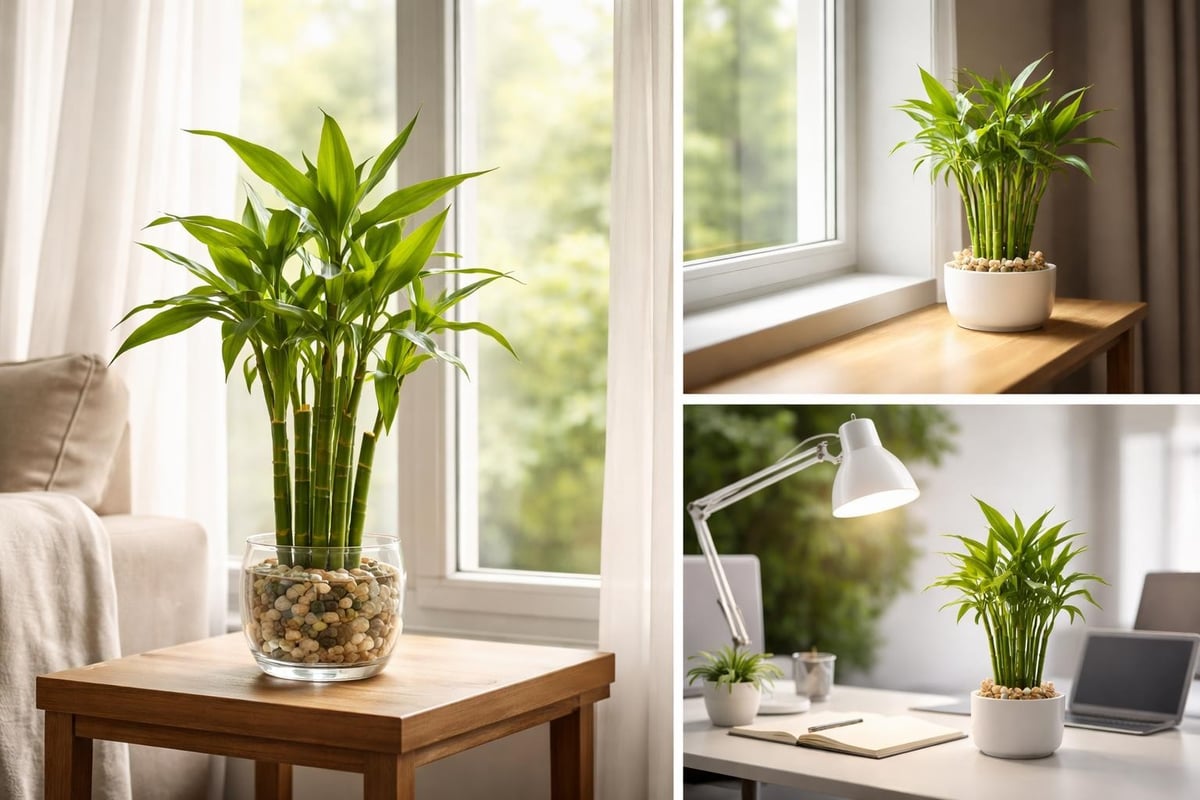
Lucky bamboo thrives in bright, indirect light conditions similar to what you'd find beneath a forest canopy. Direct sunlight causes leaf scorch and yellowing, while insufficient light leads to weak, spindly growth. Place your plant near a north or east-facing window, or position it several feet away from brighter exposures.
Temperature stability matters more than specific ranges. Keep your lucky bamboo in environments between 65-90°F, avoiding cold drafts, heating vents, and air conditioning units that create temperature fluctuations.
| Care Factor | Ideal Condition | Signs of Problems |
|---|---|---|
| Light | Bright, indirect | Yellow leaves (too much), pale/weak growth (too little) |
| Temperature | 65-90°F | Brown tips (too cold), wilting (temperature stress) |
| Water Quality | Filtered or distilled | Yellow stalks (chlorine/fluoride damage) |
| Humidity | 40-60% | Brown leaf edges (too dry) |
Watering Methods and Water Quality
Most people grow lucky bamboo in water rather than soil, which simplifies maintenance considerably. Proper watering practices include changing the water every two to three weeks to prevent algae growth and bacterial buildup.
Water quality significantly impacts plant health. Tap water containing chlorine, fluoride, or high mineral content can cause yellow stalks and leaf damage. Use filtered, distilled, or rainwater instead. If growing in water:
- Maintain water levels covering the roots completely
- Add fresh water weekly to replace evaporation
- Perform complete water changes biweekly
- Keep water depth at 2-3 inches minimum
For soil-grown lucky bamboo, maintain consistently moist but not waterlogged conditions. Well-draining potting mix prevents root rot while retaining adequate moisture. Similar to care approaches for other low-maintenance indoor plants, monitoring soil moisture prevents most common issues.
Feng Shui Symbolism and Stalk Meanings
The cultural significance of lucky bamboo extends beyond its visual appeal, carrying specific meanings based on the number of stalks in each arrangement. These symbolic associations make the plant a thoughtful gift for various occasions and intentions.
Traditional Number Meanings
Different stalk configurations represent distinct blessings and aspirations. Understanding these meanings helps you select arrangements aligned with your goals or choose appropriate gifts:
- Two stalks: Love, marriage, and partnership
- Three stalks: Happiness, wealth, and longevity
- Five stalks: Health, covering all areas of life
- Six stalks: Prosperity and good fortune
- Seven stalks: Good health and personal growth
- Eight stalks: Abundance and infinite growth
- Nine stalks: Great luck and lasting fortune
- Ten stalks: Perfection and completeness
Avoid four-stalk arrangements, as the number four sounds similar to the word for death in Chinese culture. Twenty-one stalks, called the "Tower of Love," combines multiple meanings for powerful blessings.
Optimal Placement for Positive Energy
Strategic placement amplifies the beneficial energy lucky bamboo brings to your space. Eastern traditions suggest positioning plants in specific areas to enhance particular life aspects. The wealth corner (southeast) attracts prosperity, while the health area (east) promotes physical well-being.
Place arrangements where you'll see them daily, as their presence serves as visual reminders of your intentions. Offices benefit from desk placement to enhance career success, while bedrooms can host smaller arrangements promoting peace and relationships.
Propagation and Training Techniques
Growing new plants from existing stalks and creating decorative shapes adds another dimension to lucky bamboo cultivation. These techniques require patience but yield impressive results that personalize your plant displays.
Creating New Plants from Cuttings
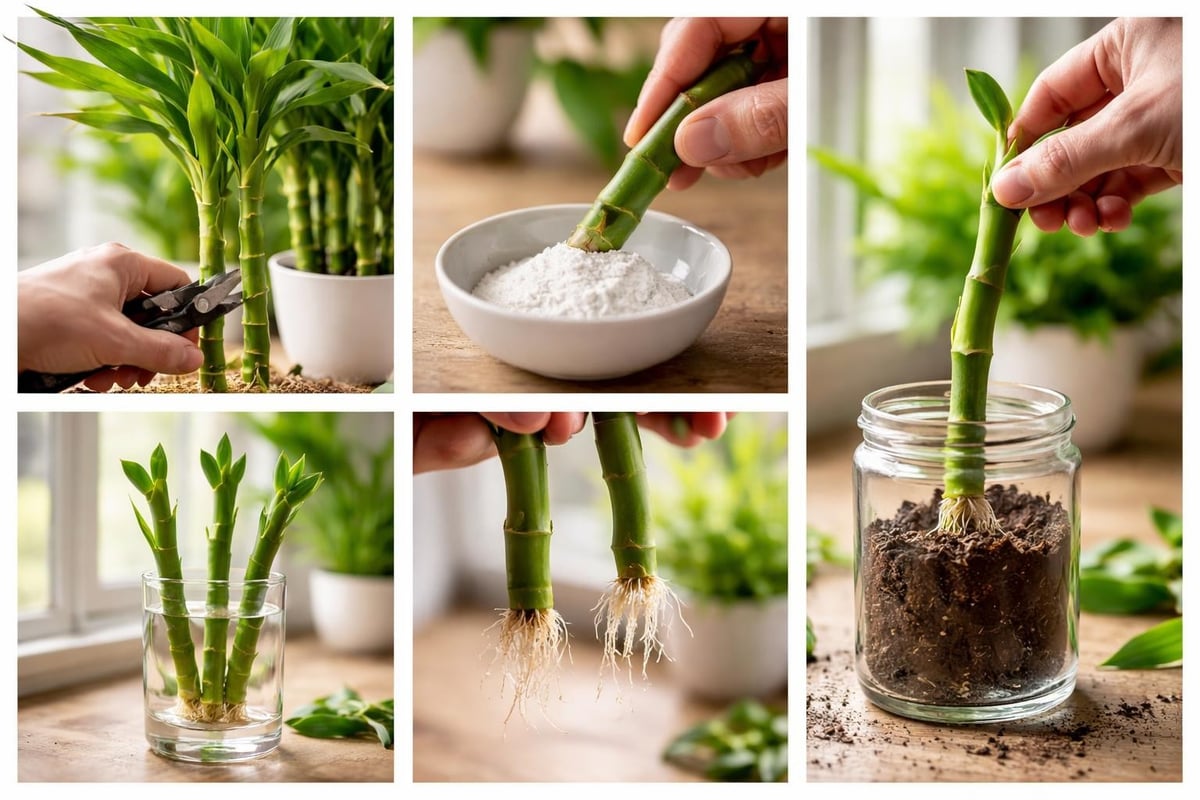
Propagation transforms single plants into multiple specimens for expanded displays or sharing with friends. Select healthy stalks showing vigorous growth and no signs of disease. Using clean, sharp pruning shears:
- Cut stalks at least 6 inches long, making clean cuts below nodes
- Remove lower leaves to prevent rot in water
- Place cuttings in filtered water with rooting hormone (optional)
- Change water every three days until roots develop (2-4 weeks)
- Transfer to permanent containers once roots reach 2 inches
The parent plant develops new shoots from cut points, creating bushier growth over time. This natural response allows you to maintain desired heights while generating new plants.
Shaping and Spiral Training
The distinctive spirals and curves in lucky bamboo don't occur naturally but result from controlled light exposure during growth. Commercial growers rotate plants toward light sources, causing stalks to curve as they grow toward brightness. Creating spirals at home requires months of consistent rotation.
For simpler shaping, use wire or soft ties to gently guide stalks into desired positions. Support structures maintain shapes until stalks lignify (harden) and hold positions independently. Patience yields dramatic architectural forms that become conversation pieces.
Troubleshooting Common Issues
Even resilient plants like lucky bamboo occasionally face challenges requiring intervention. Recognizing problems early prevents minor issues from becoming serious threats to plant health.
Yellow Leaves and Stalks
Yellowing represents the most common lucky bamboo complaint, typically resulting from water quality issues or excessive light exposure. Addressing yellowing leaves promptly preserves plant vitality and appearance.
Yellow leaves usually indicate too much direct sunlight, requiring relocation to shadier spots. Trim affected leaves cleanly at their base using sterilized scissors. Yellow stalks signal more serious problems, often from chlorinated water or fertilizer buildup. Complete water changes with filtered water usually reverse mild cases, but severely yellow stalks may be dying and require removal.
Algae Growth and Root Rot
Algae development in water containers appears as green film or cloudiness. While not directly harmful to plants, algae compete for nutrients and create unsightly conditions. Prevent algae by:
- Using opaque containers blocking light from water
- Reducing light exposure reaching the water
- Adding small amounts of activated charcoal to water
- Performing more frequent water changes
Root rot manifests as mushy, brown roots with foul odors. Immediately remove affected plants, trim damaged roots, and replant in fresh water or clean soil. Many of the same prevention strategies used for fungus and mold apply to lucky bamboo maintenance.
| Problem | Cause | Solution |
|---|---|---|
| Yellow leaves | Direct sun, overfeeding | Move to shade, reduce fertilizer |
| Yellow stalks | Poor water quality | Use filtered/distilled water |
| Brown tips | Chlorine, fluoride, low humidity | Change water source, increase humidity |
| Algae growth | Light reaching water | Use opaque containers, reduce light |
| Weak growth | Insufficient light | Provide brighter indirect light |
| Root rot | Stagnant water, overwatering | Fresh water changes, trim roots |
Fertilization and Nutrient Management
Lucky bamboo requires minimal fertilization compared to many houseplants, but occasional feeding supports healthy growth and vibrant coloration. Overfertilizing causes more problems than underfertilizing with these modest feeders.
Fertilizer Types and Application Frequency
Use diluted liquid houseplant fertilizer specifically formulated for aquatic or tropical plants. Apply at one-quarter to one-half the recommended strength to prevent nutrient burn. Water-grown plants benefit from monthly feeding during active growth (spring and summer), while soil-grown specimens tolerate slightly more frequent applications.
Fertilizer application for water-grown plants:
- Add diluted fertilizer during water changes
- Use balanced formulations (10-10-10 or similar ratios)
- Skip fertilizer entirely during winter dormancy
- Watch for yellow stalks indicating overfertilization
Soil-based lucky bamboo accesses nutrients from potting mix, reducing fertilizer requirements further. Feed every 6-8 weeks during growing season with heavily diluted solutions.
Display Ideas and Container Selection
The minimalist beauty of lucky bamboo suits various interior design styles, from modern apartments to traditional offices. Creative container choices and arrangement styles transform simple plants into striking focal points.
Container Options and Considerations
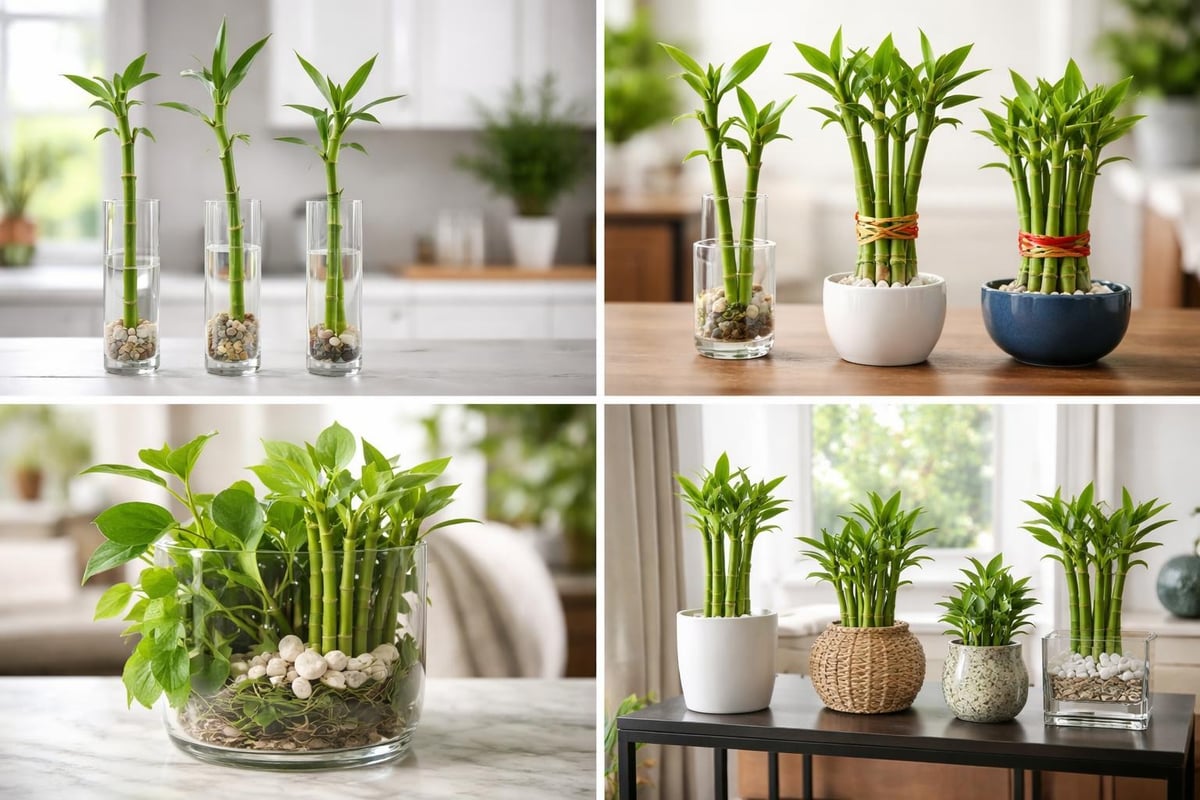
Glass vases showcase root systems and water levels, creating contemporary displays. Ceramic containers in Asian-inspired designs complement the plant's cultural heritage, while modern geometric planters suit minimalist aesthetics. When selecting containers:
- Ensure adequate depth for root systems (minimum 4 inches)
- Choose stable bases preventing tip-overs, especially for tall arrangements
- Consider drainage for soil-based plantings
- Match styles to surrounding décor themes
Grouping multiple containers at varying heights creates dynamic displays. Combining lucky bamboo with complementary plants like spider plants or philodendrons adds textural variety while maintaining easy-care requirements.
Creative Arrangement Styles
Beyond traditional straight-stalk presentations, explore creative approaches that maximize visual impact:
- Tiered arrangements: Vary stalk heights creating cascading effects
- Rock garden displays: Combine stones, pebbles, and plants in shallow trays
- Living sculptures: Shape multiple stalks into geometric patterns
- Mixed species containers: Pair with other water-tolerant plants
For those interested in exploring plant care tips across various species, lucky bamboo serves as an excellent gateway plant demonstrating hydroponics principles without complex equipment.
Soil Growing as an Alternative Method
While water cultivation remains most popular, growing lucky bamboo in soil offers certain advantages including stronger root systems and reduced algae concerns. This method more closely mimics the plant's natural growing conditions in African rainforests.
Transitioning from Water to Soil
Plants can transition between growing mediums with proper acclimation. Moving water-grown specimens to soil requires gradual adjustment:
- Select well-draining potting mix designed for tropical plants
- Choose containers with drainage holes preventing waterlogging
- Plant at the same depth stalks grew in water
- Keep soil consistently moist (not soggy) for the first month
- Reduce watering frequency as roots establish
Soil-grown lucky bamboo develops more extensive root systems supporting larger plant sizes. This method suits gardeners maintaining primarily soil-based plant collections seeking consistent care routines.
Soil Mix Recommendations
Ideal soil compositions balance moisture retention with drainage, preventing both root rot and drought stress. Create custom mixes combining:
- 50% peat moss or coco coir for moisture retention
- 30% perlite or pumice for drainage
- 20% compost or worm castings for nutrients
Alternatively, quality commercial potting mixes formulated for tropical plants or African violets work well without modifications. Avoid heavy garden soils lacking adequate aeration for healthy root development.
Seasonal Care Adjustments
Lucky bamboo maintains relatively consistent care requirements year-round compared to many houseplants, but subtle seasonal adjustments optimize growth and prevent stress during environmental changes.
Winter Dormancy Considerations
During winter months, reduced light intensity and shorter days slow growth naturally. Plants enter semi-dormant states requiring modified care approaches. Winter care modifications include:
- Reduced watering frequency as growth slows
- Eliminated or minimal fertilization until spring
- Protection from cold window drafts and heating vents
- Maintained humidity levels despite dry indoor air
Monitor plants for brown leaf tips indicating low humidity from indoor heating systems. Grouping plants together, using pebble trays, or running humidifiers addresses this common winter challenge affecting many tropical species.
Spring and Summer Growth Periods
Increasing daylight and warmth trigger active growth phases when plants benefit from optimal care conditions. Resume regular fertilization schedules and increase watering frequency as needed. This growing season provides ideal timing for:
- Propagation projects yielding quick root development
- Transplanting or repotting when necessary
- Training and shaping activities
- Introducing plants to slightly brighter locations
Much like the health and wellness benefits other houseplants provide, lucky bamboo's air-purifying qualities and stress-reducing presence peak when plants grow vigorously during warmer months.
Pet Safety and Household Considerations
Understanding plant toxicity helps households with curious pets and children make informed decisions about indoor greenery placement. While lucky bamboo offers many benefits, awareness of potential concerns ensures safe environments for all family members.
Toxicity Levels and Precautions
Lucky bamboo contains saponins that cause mild toxicity if ingested by cats, dogs, or other pets. According to care resources, ingestion may cause vomiting, drooling, or gastrointestinal upset in animals. While not severely toxic, preventing access protects pets from unnecessary discomfort.
Pet-safe placement strategies:
- Display plants on high shelves beyond pet reach
- Use hanging planters for trailing companion plants
- Choose enclosed terrariums preventing access
- Consider pet-friendly plant alternatives for homes with persistent plant nibblers
For households prioritizing pet safety above all considerations, exploring genuinely non-toxic species provides peace of mind while maintaining green spaces. Many beautiful alternatives exist for pet-loving plant enthusiasts.
Long-Term Growth and Maintenance
Established lucky bamboo can thrive for many years with consistent care, developing impressive size and visual presence over time. Understanding long-term needs ensures plants remain healthy and attractive through various life stages.
Managing Mature Plant Size
As plants age and grow taller, they may outgrow original containers or become top-heavy and unstable. Manage size through:
- Selective pruning: Remove older, lower leaves maintaining tidier appearances
- Stalk trimming: Cut stalks to desired heights, using trimmings for propagation
- Container upgrades: Transplant into larger, heavier vessels improving stability
- Support stakes: Add decorative stakes preventing toppling in tall arrangements
Regular maintenance including water changes, occasional fertilization, and monitoring for issues keeps mature plants looking their best. Just as with other beginner-friendly indoor plants, establishing consistent routines simplifies long-term care.
Division and Refreshing Old Plants
Over several years, lucky bamboo may develop crowded root systems or declining vigor. Dividing plants reinvigorates growth while creating new specimens. Carefully separate individual stalks with their root systems, removing any dead or damaged portions before replanting in fresh water or soil.
This renewal process mimics natural growth patterns where older plants eventually give way to new generations. The combination of propagation and division ensures continuous supplies of healthy, attractive plants for years to come.
Lucky bamboo combines effortless care requirements with meaningful symbolism and striking architectural beauty, making it an ideal choice for both new and experienced plant enthusiasts. Whether you're drawn to its Feng Shui significance, appreciate its minimal maintenance needs, or simply enjoy its elegant form, this versatile plant deserves a place in your indoor garden. Divine Roots carefully selects and ships thriving plants directly from their greenhouse, ensuring you receive healthy specimens ready to enhance your living space with natural beauty and positive energy.
Related Guides
- Dracaena care guide
- Watering indoor plants
- Best low-light houseplants
- How to propagate houseplants
- Root rot treatment
- Best plants for the office
About the author
Written and reviewed by Robert, Founder of Divine Roots — he grows, propagates and ships the plants we sell, and the care advice here reflects what actually works in our own greenhouse.
Frequently Asked Questions
How often should I change the water in lucky bamboo?
Change the water every one to two weeks. Lucky bamboo grown in water depends entirely on that water staying clean, so pour it out completely, rinse the pebbles, and refill with filtered or distilled water. Stagnant water goes cloudy, smells, and starts rotting the stalk base.
Why are my lucky bamboo leaves turning yellow?
Yellow leaves usually mean fluoride or chlorine in tap water, too much direct sun, or over-fertilizing. Switch to filtered, distilled, or rainwater, move the plant to bright indirect light, and feed only a couple of drops of diluted liquid fertilizer every two months at most.
Can lucky bamboo grow in soil instead of water?
Yes, and it often grows faster and lives longer in soil. Use a well-draining potting mix, keep it lightly moist but never soggy, and water when the top inch dries. Stalks moved from water to soil may sulk for a few weeks before rooting properly.
Is lucky bamboo actually bamboo?
No. Lucky bamboo is Dracaena sanderiana, a member of the dracaena family, not a true bamboo. It only earned the name from its jointed, cane-like stalks. That matters for care: it wants warm indoor conditions and indirect light, not the full sun a real bamboo needs.
How much light does lucky bamboo need?
Bright indirect light is ideal. Lucky bamboo tolerates lower light better than most houseplants, which is why it survives in offices, but growth slows and colour fades. Direct sun scorches the leaves quickly, leaving dry brown patches, so keep it out of unfiltered afternoon windows.
Is lucky bamboo toxic to cats and dogs?
Yes, lucky bamboo is toxic to cats and dogs if chewed, causing drooling, vomiting, and loss of appetite. Keep it well out of reach in pet households, or choose from genuinely pet-safe houseplants instead if your animals are determined climbers and chewers.
Share