

Peace Lily Water: Complete Guide to Proper Hydration
Peace lilies rank among the most beloved houseplants for their elegant white blooms and air-purifying qualities, yet their watering needs often confuse even experienced plant owners. Understanding peace lily water requirements forms the foundation of successful care, as these tropical plants exhibit specific hydration preferences that differ significantly from other common houseplants. Getting the watering routine right means the difference between a thriving, blooming specimen and a struggling plant with yellowing leaves and stunted growth.
Understanding Peace Lily Water Needs
Peace lilies originate from the tropical rainforests of Central and South America, where they grow beneath the canopy in consistently moist but well-draining soil. This natural habitat provides crucial insight into their water requirements. These plants prefer evenly moist soil that never becomes waterlogged or completely dry.
The most common mistake plant owners make involves following a rigid watering schedule rather than responding to the plant's actual needs. Understanding proper watering techniques requires observing your peace lily's environment, as factors like temperature, humidity, light exposure, and pot size all influence how quickly soil dries out.
Signs Your Peace Lily Needs Water
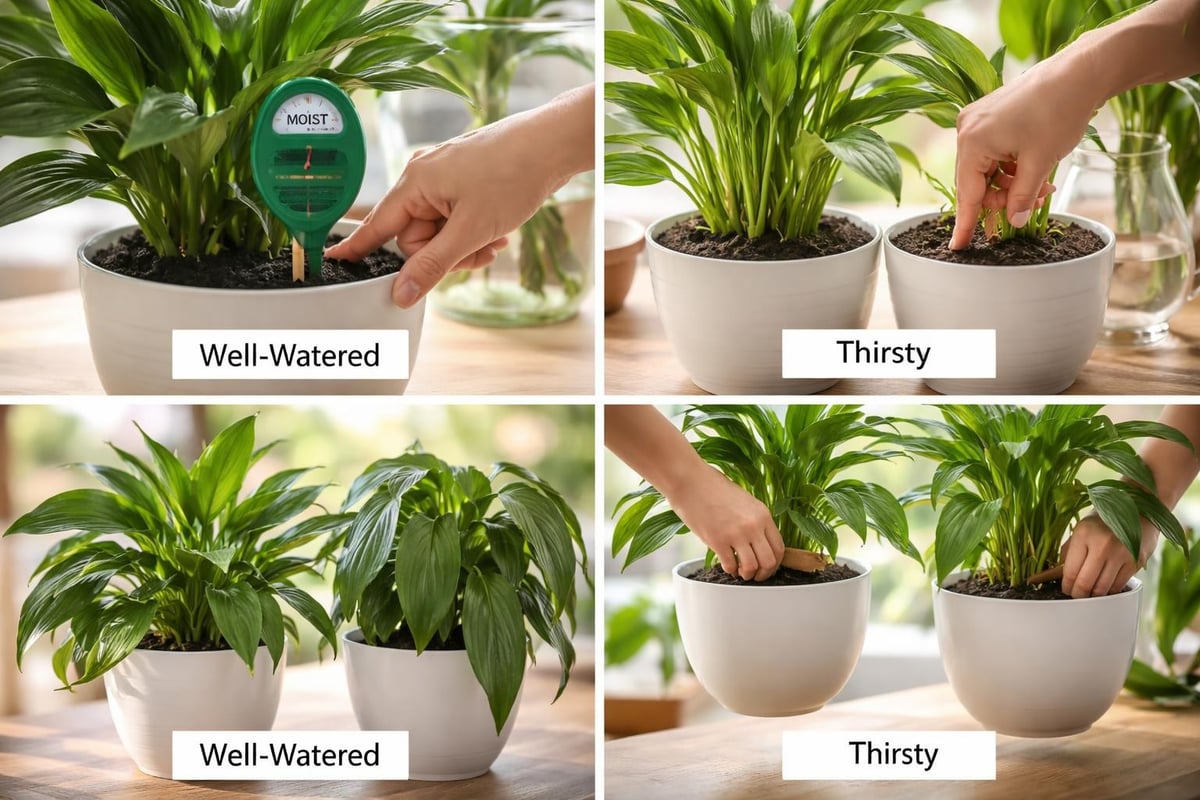
Peace lilies communicate their thirst through several visible indicators:
- Slight drooping of leaves and stems
- Loss of firmness in foliage
- Top inch of soil feels dry to the touch
- Lighter weight when lifting the pot
- Leaves begin to curl slightly inward
Most peace lilies will droop noticeably when thirsty, providing a clear visual cue. However, waiting until dramatic drooping occurs stresses the plant unnecessarily. The goal involves maintaining consistent moisture levels that prevent these extreme fluctuations.
Water Quality Matters for Peace Lilies
The type of water you use significantly impacts peace lily health. Tap water chemicals like chlorine and fluoride accumulate in soil over time, causing brown leaf tips and edges that many plant owners mistakenly attribute to other issues.
Best Water Options
| Water Type | Benefits | Considerations |
|---|---|---|
| Filtered Water | Removes chlorine and fluoride | Requires filtration system |
| Distilled Water | Completely pure, no chemicals | Can be expensive for regular use |
| Rainwater | Natural, chemical-free | Requires collection system |
| Tap Water (treated) | Convenient, accessible | Must sit 24 hours to off-gas chlorine |
Filtered or distilled water provides optimal results for peace lily water needs. If using tap water, fill containers and let them sit uncovered for 24 hours, allowing chlorine to evaporate. This simple step prevents the chemical buildup that leads to unsightly brown tips.
Temperature also matters. Room-temperature water prevents shock to the root system, whereas cold water can stress the plant and slow growth. Water that sits overnight naturally reaches room temperature, addressing both the chemical and temperature concerns simultaneously.
Proper Peace Lily Watering Technique
How you water matters as much as when you water. Divine Roots recommends bottom watering for peace lilies, though top watering works when done correctly. Each method offers distinct advantages for maintaining healthy indoor plants.
Bottom Watering Method
- Place the pot in a tray or basin filled with 2-3 inches of water
- Allow the plant to absorb water through drainage holes for 15-20 minutes
- Remove from water once the top inch of soil feels moist
- Drain excess water completely before returning to its usual location
- Empty the saucer to prevent standing water
Bottom watering encourages roots to grow downward, creating a stronger root system. This method also reduces the risk of fungal issues that sometimes develop on soil surfaces with frequent top watering.
Top Watering Method
Pour water evenly across the soil surface until it drains from the bottom holes. Water thoroughly rather than giving small amounts frequently. Shallow watering encourages shallow root development and leaves lower soil dry.
Always use pots with drainage holes. Without proper drainage, peace lily water accumulates at the bottom, leading to root rot regardless of how carefully you water. The excess must escape freely after each watering session.
Seasonal Peace Lily Water Adjustments
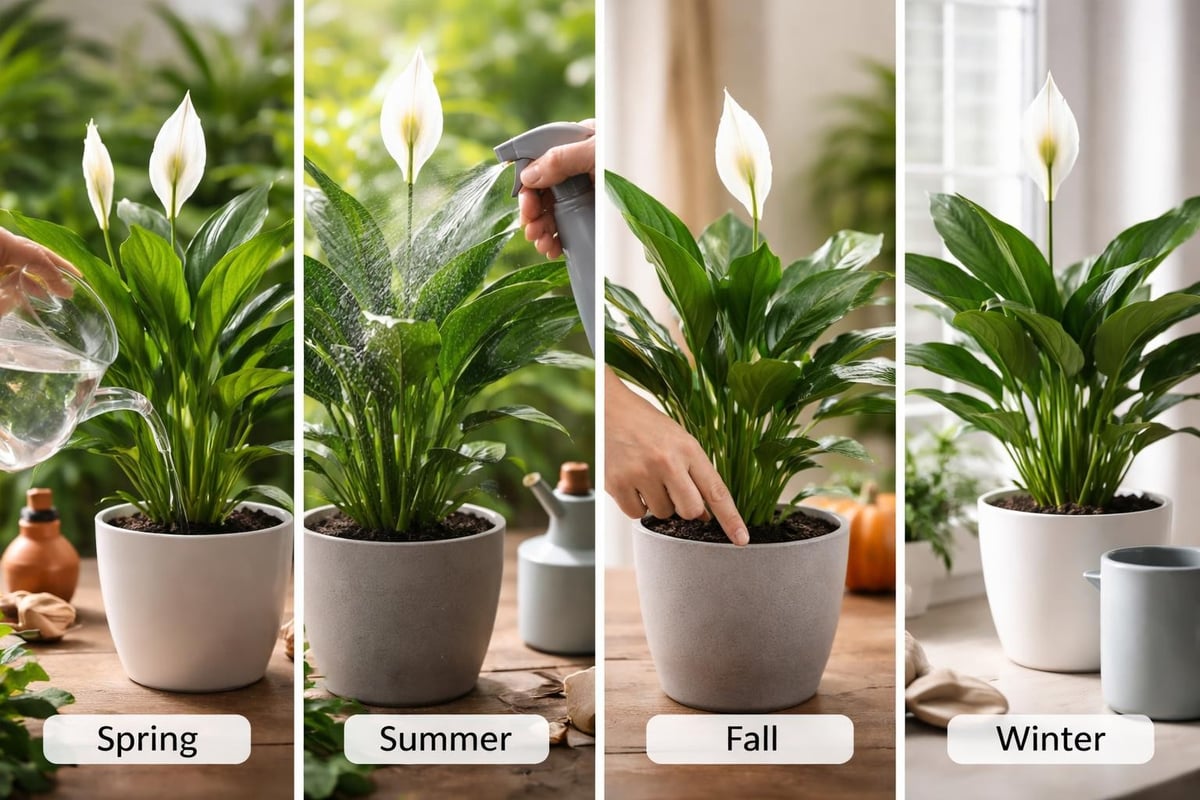
Peace lily water requirements fluctuate throughout the year based on growing conditions and the plant's natural cycles. Seasonal adjustments keep your plant healthy year-round.
Spring and summer represent the active growing season. Peace lilies may need water every 5-7 days during this period as increased light and warmth accelerate growth and evaporation. Monitor soil moisture closely as temperatures rise.
Fall and winter slow growth considerably. Reduce watering frequency to every 10-14 days, adjusting based on your home's heating system and humidity levels. Indoor heating dries air rapidly, sometimes requiring more frequent watering than outdoor temperature would suggest.
Environmental Factors Affecting Water Needs
- Light intensity: Brighter locations increase water consumption
- Humidity levels: Low humidity accelerates soil drying
- Air circulation: Fans and vents speed evaporation
- Pot material: Terracotta dries faster than plastic or ceramic
- Plant size: Larger plants consume more water
Divine Roots' selection of air-purifying plants includes peace lilies specifically chosen for their adaptability to various indoor environments, making them excellent choices for homes and offices.
Common Peace Lily Water Mistakes
Understanding what to avoid proves as important as knowing proper techniques. Common watering errors cause most peace lily problems, yet they're easily preventable with awareness.
Overwatering Symptoms
Yellow leaves, particularly older lower leaves, indicate excessive water. The soil remains soggy for days after watering, and the pot feels heavy continuously. Root rot develops in chronically wet conditions, manifesting as mushy brown roots and wilting despite wet soil.
Overwatered peace lilies may also develop fungal growth on soil surfaces or emit a sour smell from decomposing roots. This situation requires immediate intervention, including repotting in fresh soil and trimming damaged roots.
Underwatering Symptoms
Brown, crispy leaf edges combined with drooping indicate insufficient water. The entire plant wilts dramatically, and leaves may turn yellow and drop. Soil pulls away from pot edges and becomes hard when severely dry.
Chronic underwatering stunts growth and prevents flowering. While peace lilies tolerate occasional drying better than constant overwatering, regular drought stress weakens the plant over time.
| Issue | Cause | Solution |
|---|---|---|
| Brown tips | Fluoride/chlorine buildup | Switch to filtered water |
| Yellow leaves | Overwatering | Reduce frequency, improve drainage |
| Dramatic drooping | Severe underwatering | Water thoroughly, establish consistent routine |
| Slow growth | Inconsistent watering | Monitor soil moisture regularly |
Testing Soil Moisture Accurately
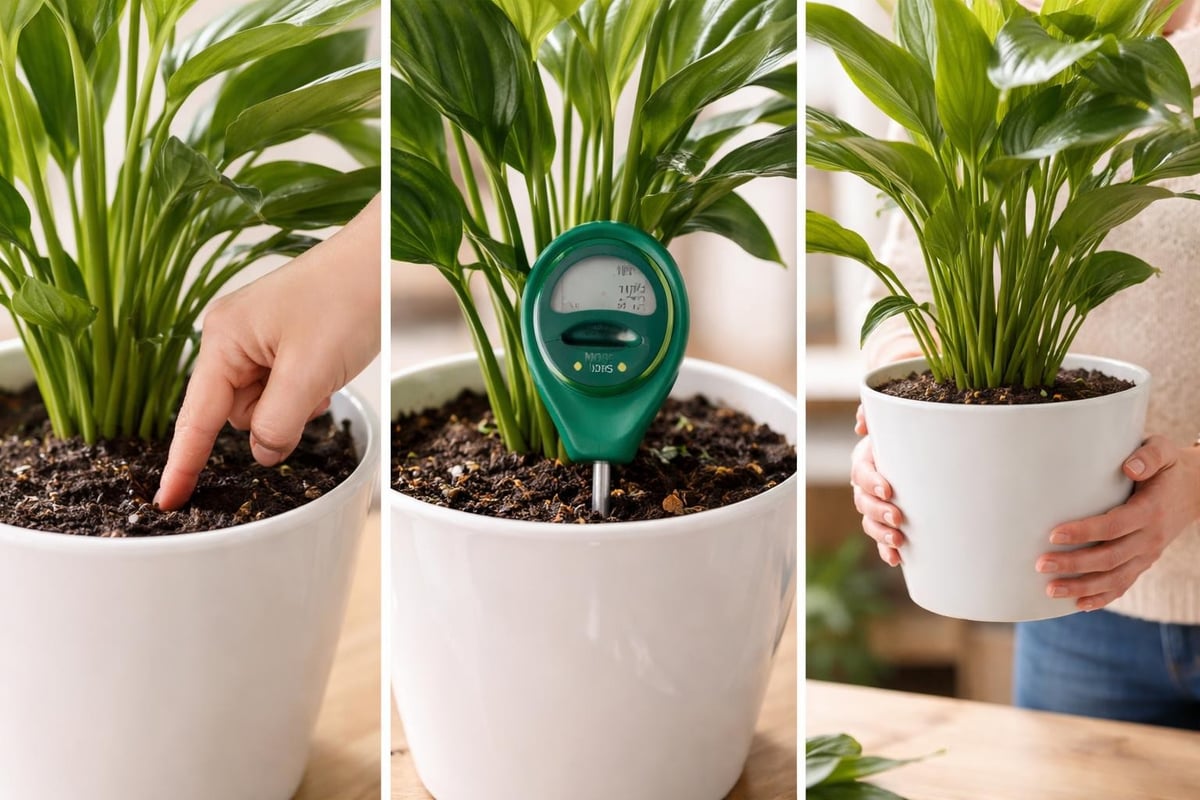
Relying on visual cues alone can mislead, making soil moisture testing essential for proper peace lily water management. Several reliable methods help you determine when watering becomes necessary.
The finger test remains the simplest approach. Insert your finger 1-2 inches into the soil. If it feels dry at this depth, water thoroughly. If moisture remains, wait another day or two before checking again.
Moisture meters provide objective readings, particularly helpful for beginners learning their plant's rhythms. These inexpensive tools measure moisture at root level, eliminating guesswork. Insert the probe into multiple spots around the pot for accurate assessment.
Pot weight offers another reliable indicator. Lift your peace lily after thorough watering to learn its heavy weight, then again when it needs water. This weight difference becomes obvious with practice, allowing quick assessment without tools.
Humidity and Peace Lily Water Requirements
Peace lilies appreciate humid environments, and low humidity increases their water needs significantly. Dry air causes faster transpiration, requiring more frequent watering to compensate. Maintaining proper humidity reduces stress and supports healthy growth.
Ideal humidity ranges between 50-60% for peace lilies. Most homes maintain 30-40% humidity, particularly during winter heating seasons. Increasing humidity through various methods reduces watering frequency while improving overall plant health.
Humidity-Boosting Strategies
- Group plants together to create a micro-humid environment
- Place on pebble trays filled with water below pot level
- Use a humidifier in rooms with multiple plants
- Mist leaves occasionally (not a substitute for watering)
- Locate away from heating vents and air conditioners
Higher humidity means peace lily water needs decrease slightly because plants lose less moisture through leaves. This creates a more stable environment that mimics their natural tropical habitat. Expert advice on watering routines emphasizes adjusting for your home's specific conditions rather than following generic schedules.
Fertilizing and Its Impact on Watering
Fertilizer application affects peace lily water needs indirectly. Salt buildup from fertilizers accumulates in soil, potentially burning roots and causing symptoms similar to underwatering despite adequate moisture. This buildup requires occasional flushing with water.
Monthly feeding during spring and summer supports blooming and growth. Use a balanced, water-soluble fertilizer diluted to half-strength. Always water peace lilies before fertilizing to prevent root burn, and water again after applying fertilizer to distribute nutrients evenly.
Every 2-3 months, flush the soil by running water through the pot for several minutes, allowing it to drain completely. This leaching process removes accumulated salts that interfere with water absorption. Signs of salt buildup include white crusty deposits on soil surfaces or pot rims.
Divine Roots provides comprehensive care information with every plant purchase, ensuring customers understand the specific needs of their best-selling plants including peace lilies.
Repotting and Peace Lily Water Changes
Repotting affects water retention significantly. Fresh potting mix absorbs and drains differently than compacted old soil, requiring adjustment to your watering routine. Peace lilies typically need repotting every 18-24 months or when roots emerge from drainage holes.
After repotting, water thoroughly to settle soil around roots and eliminate air pockets. New potting mix may retain moisture longer initially, so monitor closely for the first few weeks. Reduce watering frequency slightly until you establish the new soil's characteristics.
Choose pots only 1-2 inches larger than the current container. Oversized pots hold excessive water, increasing overwatering risk. The goal involves providing room for growth while maintaining appropriate soil volume for the root system.
Post-Repotting Care Schedule
- Water immediately after repotting to settle soil
- Monitor daily for the first week, checking moisture levels
- Reduce watering slightly compared to pre-repotting routine
- Watch for stress signs like drooping or yellowing
- Adjust gradually as the plant establishes in new soil
Peace Lily Water and Blooming
Proper hydration directly influences peace lily blooming. Inconsistent watering stresses plants, redirecting energy from flower production to survival. Maintaining steady moisture levels, combined with appropriate light and fertilization, encourages the distinctive white spathes.
Consistent moisture proves more important than any other single factor for blooming. Peace lilies that experience regular drought cycles rarely flower, even when other conditions remain optimal. The plant must feel secure in its environment to invest energy in reproduction.
Interestingly, slight stress from brief drying can sometimes trigger blooming in stubborn plants. However, this technique requires experience and shouldn't replace consistent care. For reliable flowering, proper watering practices combined with adequate light produce the best results.
Troubleshooting Peace Lily Water Issues
When peace lily problems arise, water-related issues top the list of potential causes. Systematic troubleshooting identifies the root cause and guides appropriate solutions.
Step-by-step diagnosis begins with soil moisture assessment. Check if soil is soggy, appropriately moist, or dry. Examine roots if possible by gently removing the plant from its pot. Healthy roots appear white or light tan, while rotted roots turn brown and mushy.
Review your watering history honestly. How often have you watered in recent weeks? Did you adjust for seasonal changes or environmental shifts? Sometimes the solution involves simply increasing or decreasing frequency based on current conditions.
Consider water quality if brown tips persist despite proper watering frequency. Switching to filtered or distilled water resolves most chemical-related issues within weeks as new growth emerges. Comprehensive watering guides help identify specific symptoms and their causes.
Quick Reference Problem Solver
| Symptom | Most Likely Cause | Action Required |
|---|---|---|
| Wilting with wet soil | Root rot from overwatering | Reduce watering, check drainage, consider repotting |
| Crispy brown edges | Underwatering or low humidity | Increase watering frequency, boost humidity |
| Brown tips only | Tap water chemicals | Switch to filtered or distilled water |
| Yellow lower leaves | Overwatering | Allow soil to dry more between waterings |
| No blooms | Inconsistent watering | Establish regular moisture monitoring routine |
Building a Sustainable Watering Routine
Success with peace lily water management comes from observation and adjustment rather than rigid schedules. Each plant and environment combination creates unique requirements that change over time.
Start with weekly checks of soil moisture, adjusting frequency based on findings. Keep brief notes about watering dates and plant responses for the first month. Patterns emerge quickly, revealing your specific peace lily's preferences.
Develop consistency in your checking routine even as watering frequency varies. Checking every Monday regardless of whether watering occurs ensures you never forget or inadvertently neglect your plant. This regularity prevents the boom-and-bust cycle that stresses peace lilies.
Remember that peace lilies tolerate brief drying better than constant overwatering. When uncertain, wait an extra day. This conservative approach prevents the most serious issue-root rot-while avoiding the easily corrected problem of temporary wilting.
Divine Roots understands that plant care success depends on education and support. Their selection of easy care plants includes detailed care guides that help both beginners and experienced plant parents develop effective routines tailored to their lifestyles.
Mastering peace lily water requirements transforms these elegant plants from challenging specimens into reliable, thriving members of your indoor garden. By understanding soil moisture needs, choosing appropriate water quality, and adjusting for seasonal and environmental changes, you create conditions where peace lilies flourish year-round. Whether you're starting your plant journey or expanding an established collection, Divine Roots delivers healthy, greenhouse-grown peace lilies along with the expert guidance needed to keep them thriving in your home.
🌿 Related Reading
- Easy Care Houseplants
- Low Light Indoor Plants
- How to Care for Peace Lily
- How to Care for Calathea
- How to Care for Chinese Evergreen
About the author
Written and reviewed by Robert, Founder of Divine Roots — he grows, propagates and ships the plants we sell, and the care advice here reflects what actually works in our own greenhouse.
Frequently Asked Questions
How often should I water a peace lily?
Roughly once a week in spring and summer and every ten to fourteen days in winter, but always check the soil first. Water thoroughly when the top inch feels dry, letting excess drain away fully. Pot size, light, and room warmth shift the interval considerably.
Should I wait for my peace lily to droop before watering?
No. Using the dramatic droop as a reminder works, but every wilt stresses the plant and eventually costs you leaf tips and flowers. Check the soil weekly with a finger and water just before the droop rather than after it becomes visible.
Can peace lilies be grown in water alone?
Yes, peace lilies grow well in water culture, with the roots submerged and the crown held above the waterline. Change the water every one to two weeks, rinse the roots, and add a few drops of dilute hydroponic fertilizer monthly to prevent nutrient deficiency.
Why are my peace lily leaf tips turning brown?
Brown tips are usually caused by chlorine or fluoride in tap water, letting the plant dry out too far, or dry indoor air. Switch to filtered or distilled water left to stand, water more consistently, and raise humidity with grouping or a pebble tray.
Can you overwater a peace lily?
Yes, and it is the fastest way to kill one. Soil that stays wet suffocates the roots, causing yellow lower leaves, a drooping plant that does not perk up after watering, and a sour smell. Always empty the saucer and use a pot with drainage.
What kind of water is best for peace lilies?
Filtered, distilled, or rainwater is best, because peace lilies are sensitive to fluoride and chlorine. If you only have tap water, let it stand uncovered overnight so chlorine dissipates, though this does not remove fluoride. Room-temperature water avoids shocking the roots.
Share