

Peace Lily Varieties: Complete Guide for 2026
Peace lilies rank among the most beloved houseplants for indoor gardening enthusiasts, combining elegant white blooms with lush green foliage and exceptional air-purifying qualities. While many plant lovers recognize the classic peace lily, the diversity within this plant family offers exciting options for every space and skill level. Understanding the different peace lily varieties available helps you select specimens that perfectly match your home's lighting conditions, available space, and aesthetic preferences. Whether you're furnishing a compact apartment or designing a dramatic focal point for a spacious living room, there's a peace lily cultivar suited to your needs.
Understanding the Spathiphyllum Family
The botanical genus Spathiphyllum encompasses all peace lily varieties, with over 40 recognized species originating from tropical regions of Central and South America, as well as Southeast Asia. These plants earned their common name from the distinctive white spathe that resembles a white flag of peace, though botanically this structure is a modified leaf rather than a true flower.
Key characteristics shared across peace lily varieties include:
- Glossy, dark green foliage with prominent veining
- White or cream-colored spathes surrounding a central spadix
- Rhizomatous root systems that spread horizontally
- Tolerance for low-light conditions compared to most flowering plants
- Natural air-purifying capabilities that remove toxins from indoor environments
The visual identification guide for peace lilies helps distinguish different varieties based on their unique botanical features. While all peace lilies share fundamental traits, cultivars vary significantly in mature size, leaf shape, bloom frequency, and growing requirements.
Compact and Dwarf Peace Lily Varieties
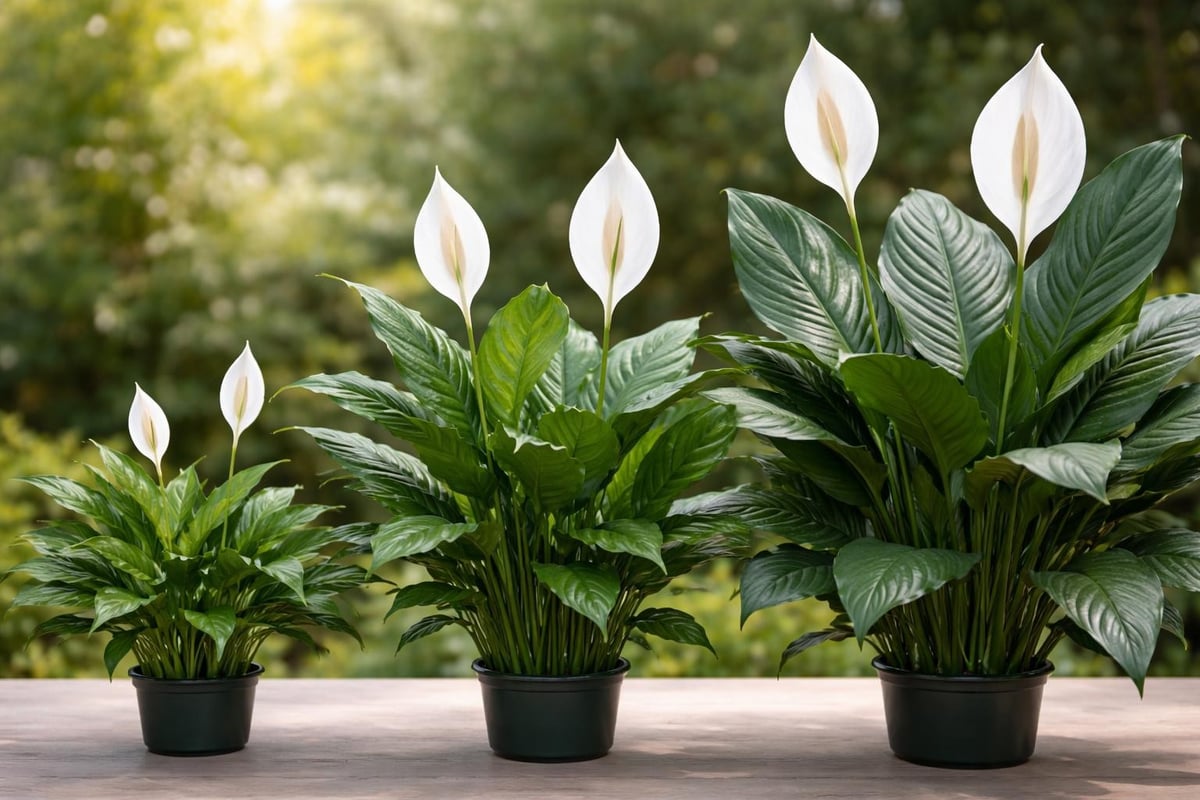
For those working with limited space or seeking desk-sized specimens, compact peace lily varieties deliver all the elegance of their larger cousins in a condensed package. These smaller cultivars typically mature at heights between 8 and 15 inches, making them ideal for tabletops, shelves, and small plant stands.
Spathiphyllum 'Petite'
This miniature variety reaches just 8 to 12 inches in height at maturity, producing proportionally smaller leaves and delicate white blooms. The 'Petite' cultivar works exceptionally well in terrariums or grouped arrangements where multiple plants create visual impact without overwhelming available space.
Spathiphyllum 'Wallisii'
Often considered the original dwarf peace lily, 'Wallisii' typically grows 12 to 15 inches tall with narrow, lance-shaped leaves. This variety blooms reliably throughout the year when provided with adequate indirect light and consistent moisture. If you're exploring easy-to-care indoor plants for beginners, 'Wallisii' represents an excellent starting point.
Mini Peace Lily
Generic mini varieties available through many retailers max out around 10 to 14 inches, offering flexibility in placement throughout your home. These compact specimens tolerate lower light levels particularly well, though blooming frequency increases with brighter indirect exposure.
| Compact Variety | Mature Height | Best Location | Bloom Frequency |
|---|---|---|---|
| 'Petite' | 8-12 inches | Desks, shelves | Moderate |
| 'Wallisii' | 12-15 inches | Side tables | High |
| Generic Mini | 10-14 inches | Anywhere | Moderate |
Medium-Sized Peace Lily Varieties
Medium peace lily varieties represent the sweet spot for most indoor gardeners, offering substantial presence without requiring floor space. These cultivars typically reach 16 to 24 inches in height and width, fitting comfortably on plant stands, countertops, or wide windowsills.
Spathiphyllum 'Mauna Loa'
The 'Mauna Loa' cultivar stands as one of the most popular peace lily varieties worldwide, prized for its reliability and attractive proportions. This variety produces dark green, glossy leaves and generous white blooms that can appear year-round with proper care. Named after the Hawaiian volcano, 'Mauna Loa' typically reaches 18 to 24 inches in height.
Care highlights for 'Mauna Loa' include:
- Thrives in medium to low indirect light
- Requires consistent moisture but tolerates brief dry periods
- Benefits from monthly feeding during active growth
- Maintains compact form without extensive pruning
Spathiphyllum 'Clevelandii'
This medium-sized variety develops slightly larger leaves than 'Mauna Loa' while maintaining a similar height range. The 'Clevelandii' cultivar produces abundant blooms when mature, often displaying multiple spathes simultaneously during peak growing seasons.
The comprehensive comparison of peace lily varieties details growth requirements for different cultivars, helping you match plants to your specific environmental conditions.
Large Statement Peace Lily Varieties
For dramatic impact and substantial presence, large peace lily varieties transform ordinary rooms into lush indoor jungles. These impressive specimens can reach 3 to 6 feet in height and width, requiring floor placement and adequate surrounding space to showcase their full glory.
Spathiphyllum 'Sensation'
The undisputed giant among commonly available peace lily varieties, 'Sensation' can reach heights of 4 to 6 feet with proper care and sufficient space. This cultivar produces the largest leaves in the peace lily family, with individual fronds reaching 20 inches or more in length. The dramatic foliage creates bold architectural interest even when not in bloom.
Growing 'Sensation' Successfully
Providing appropriate conditions for large varieties requires adjustments from standard peace lily care:
- Container Selection: Choose pots at least 12 to 14 inches in diameter for mature specimens
- Soil Composition: Use rich, well-draining potting mix with added perlite for aeration
- Watering Schedule: Monitor moisture levels closely as larger plants consume water more rapidly
- Fertilization: Feed every two weeks during spring and summer with diluted liquid fertilizer
- Space Planning: Allow 3 to 4 feet of clearance around the plant for full spread
Spathiphyllum 'Power Petite'
Despite its name suggesting smaller size, 'Power Petite' grows larger than standard varieties while remaining more compact than 'Sensation'. This variety typically reaches 24 to 36 inches in height with proportionally large, robust leaves and substantial white blooms.
Variegated and Specialty Peace Lily Varieties
Beyond size variations, certain peace lily varieties offer unique foliage patterns and specialized characteristics that appeal to collectors and design-conscious plant enthusiasts.
Spathiphyllum 'Domino'
The 'Domino' cultivar stands out immediately with its variegated foliage featuring white or cream-colored streaks and splashes against dark green leaves. This variety maintains similar size to standard peace lilies but requires slightly brighter indirect light to maintain vibrant variegation. Direct sunlight burns the leaves, while insufficient light causes the variegation to fade toward solid green.
Spathiphyllum 'Picasso'
Another variegated option, 'Picasso' displays broader white sections along leaf margins and occasional full white leaves. This variety grows more slowly than solid green cultivars and benefits from extra humidity to prevent leaf edge browning on variegated sections.
Spathiphyllum 'Silver Streak'
Featuring silvery-green foliage with subtle striping, 'Silver Streak' offers a more subdued variegation than 'Domino' or 'Picasso'. This variety maintains excellent vigor while providing visual interest through its distinctive coloration.
Specialty variety care considerations:
- Variegated plants require 20-30% more light than solid green varieties
- Avoid fertilizers with high nitrogen content that can reduce variegation
- Maintain consistent humidity above 50% for optimal leaf quality
- Expect slower growth rates compared to standard green cultivars
The detailed guide to peace lily types explores care requirements specific to variegated and specialty cultivars.
Choosing the Right Peace Lily Variety for Your Space
Selecting among the numerous peace lily varieties available requires assessing your specific growing conditions and design goals. Consider these practical factors when making your choice:
Light Availability Assessment
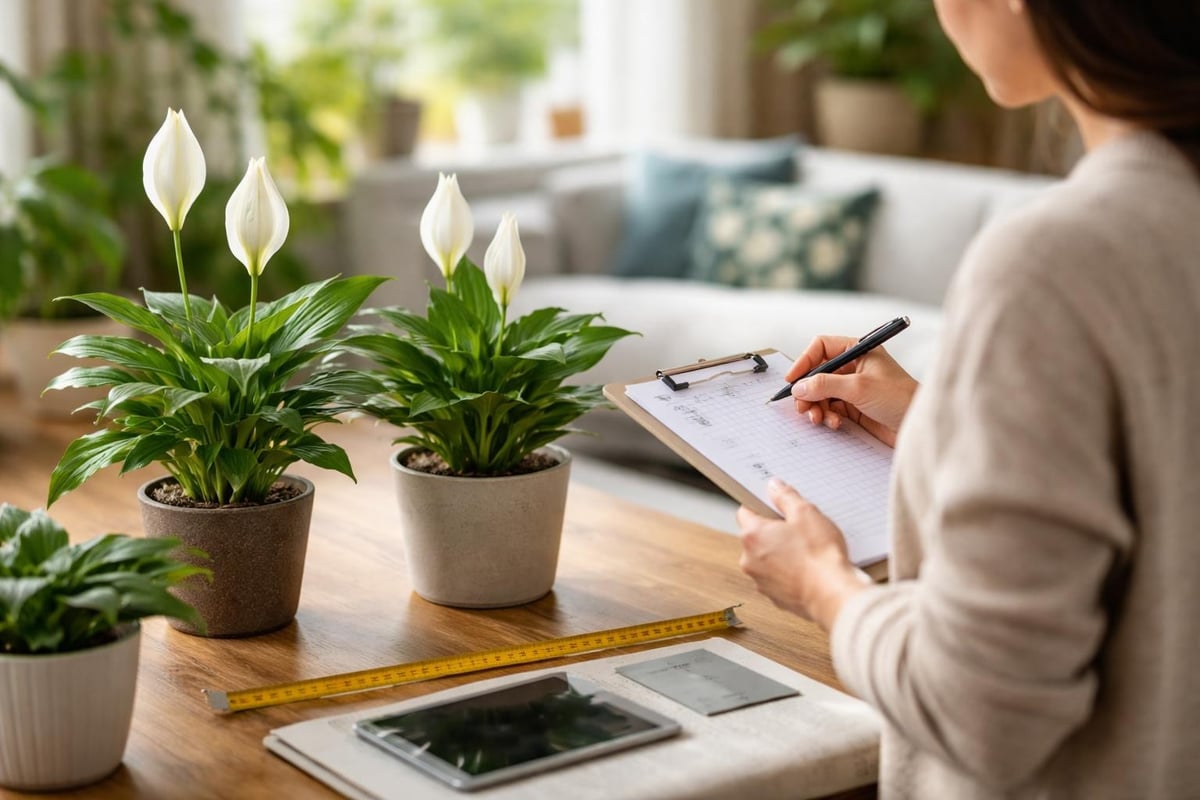
Measure the light levels in your intended placement area during different times of day. Peace lilies tolerate low light but bloom more prolifically with medium indirect light. North-facing windows provide ideal conditions, while east or west exposures work well with sheer curtains diffusing direct sun.
| Light Level | Suitable Varieties | Expected Blooming |
|---|---|---|
| Low (50-100 fc) | 'Wallisii', Mini, 'Mauna Loa' | Occasional |
| Medium (100-200 fc) | All standard varieties | Regular |
| Bright Indirect (200-400 fc) | Variegated types, 'Sensation' | Frequent |
Space and Scale Planning
Match plant mature size to available floor or surface area. Compact varieties suit apartments and offices where space is premium, while larger varieties create focal points in spacious living areas or commercial settings. Remember to account for the plant's full mature spread, not just height.
Maintenance Commitment Level
While all peace lily varieties share relatively forgiving care requirements, larger specimens demand more frequent watering and occasional leaf cleaning to maintain appearance. Variegated types need more attention to lighting and may require repositioning as seasons change. For truly low-maintenance indoor plants, standard green varieties in the small to medium size range offer the easiest care.
Understanding Growth Habits and Blooming Cycles
Different peace lily varieties exhibit varying growth patterns and flowering schedules that influence their suitability for specific purposes. Understanding these natural rhythms helps set appropriate expectations and optimize care routines.
Bloom Production Patterns
Peace lilies typically bloom in response to adequate light and maturity rather than following strict seasonal schedules. Most varieties produce their heaviest bloom flush in spring and summer, with sporadic flowers appearing year-round under ideal conditions. The spathe emerges green initially, gradually whitening over several days before fully opening.
Factors influencing bloom frequency across varieties:
- Light intensity (brighter indirect light stimulates more blooms)
- Plant maturity (established specimens bloom more reliably)
- Nutritional status (regular feeding supports flower production)
- Environmental stress (consistent conditions promote better blooming)
- Variety genetics (some cultivars naturally bloom more profusely)
Growth Rate Variations
Compact varieties generally reach mature size within 1 to 2 years under optimal conditions, while large cultivars like 'Sensation' may require 3 to 5 years to achieve full potential. Variegated types typically grow 30 to 50 percent slower than solid green varieties due to reduced chlorophyll content in white leaf sections.
Common Peace Lily Variety Misconceptions
Several myths persist about different peace lily varieties that can lead to care mistakes or unrealistic expectations. Clarifying these misunderstandings helps growers achieve better results.
"All Peace Lilies Are the Same"
While peace lily varieties share fundamental characteristics, significant differences exist in size, blooming habits, and specific care requirements. Treating a variegated 'Domino' identically to a standard 'Mauna Loa' may result in suboptimal performance for one or both plants.
"Bigger Varieties Are Harder to Grow"
Large peace lily varieties aren't inherently more difficult than compact types. They simply require more space and proportionally larger containers. The fundamental care principles remain consistent across sizes. In fact, larger plants often tolerate brief care lapses better than tiny specimens due to greater root mass and water reserves.
"Variegated Types Need Full Sun"
This dangerous misconception stems from the accurate principle that variegated plants need more light than solid green varieties. However, "more light" for peace lilies means brighter indirect light, never direct sun exposure which burns their thin leaves. Position variegated types where they receive filtered light through sheer curtains or in naturally bright rooms without direct sun contact.
The Spathiphyllum genus overview discusses botanical characteristics that clarify these common misunderstandings.
Pairing Peace Lily Varieties with Interior Design Styles
Different peace lily varieties complement specific aesthetic approaches, making variety selection part of your overall design strategy rather than just a horticultural decision.
Minimalist and Contemporary Spaces
Clean-lined interiors benefit from single dramatic specimens like 'Sensation' or 'Power Petite' positioned as sculptural elements. The bold, architectural foliage creates striking contrast against neutral walls and simple furnishings without overwhelming minimalist sensibilities.
Traditional and Classic Settings
Medium-sized varieties like 'Mauna Loa' or 'Clevelandii' suit traditional interiors, fitting comfortably on plant stands, side tables, or mantelpieces. Their refined proportions complement classic furniture without competing for visual attention.
Bohemian and Eclectic Environments
Variegated varieties like 'Domino' or 'Picasso' enhance layered, collected interiors with their unique foliage patterns. Group multiple compact varieties in decorative containers of varying heights to create lush, jungle-inspired vignettes that align with bohemian aesthetics.
Small Space and Urban Living
Compact varieties maximize greenery in limited square footage. Place mini peace lilies on floating shelves, desk corners, or bathroom counters to introduce nature without sacrificing functional space. Multiple small specimens often create more impact than a single larger plant in tight quarters, similar to strategies for creating cozy indoor gardens in small spaces.
Combining Multiple Peace Lily Varieties
Creating collections with different peace lily varieties offers visual interest while simplifying care routines since all specimens share similar requirements. Strategic combinations produce dynamic displays that evolve throughout the year.
Height and Scale Layering
Position large varieties as background anchors with medium types in the mid-ground and compact cultivars at the front. This classical design principle creates depth and prevents smaller plants from disappearing behind larger specimens.
Texture and Color Variation
Mix variegated and solid green varieties to introduce subtle color variation within a cohesive plant family. The contrasting foliage patterns create visual interest while maintaining the unified appearance of working within a single genus.
Seasonal Rotation Strategy
Maintain multiple peace lily varieties at different maturity stages to ensure continuous blooms throughout the year. As one plant finishes flowering, another enters its bloom cycle, creating perpetual white accents in your interior landscape.
Health Benefits Across Peace Lily Varieties
All peace lily varieties provide air purification benefits, though larger specimens naturally process more air volume due to greater leaf surface area. NASA's Clean Air Study identified peace lilies as effective at removing benzene, formaldehyde, trichloroethylene, xylene, and ammonia from indoor environments.
Comparative purification capacity by size:
- Compact varieties: Effective for spaces up to 100 square feet
- Medium varieties: Suitable for rooms 100 to 200 square feet
- Large varieties: Can service areas exceeding 200 square feet
Beyond air quality improvement, peace lily varieties contribute to improved health and well-being through stress reduction, humidity regulation, and the psychological benefits of nurturing living things. The presence of green plants in work and living spaces correlates with improved concentration, reduced anxiety, and enhanced creativity.
Troubleshooting Variety-Specific Issues
While peace lily varieties share many care requirements, certain problems manifest differently across cultivars or affect specific types more severely.
Variegation Loss in Specialty Varieties
Variegated peace lily varieties gradually produce more solid green growth when light levels prove insufficient. This natural response maximizes photosynthesis but defeats the aesthetic purpose of choosing variegated types. Relocate affected plants to brighter indirect light and remove any fully green leaves to encourage variegated growth.
Drooping in Large Varieties
Massive specimens like 'Sensation' may droop dramatically when experiencing water stress, creating alarm for concerned growers. This wilting appears more severe than in compact varieties simply due to greater leaf size and mass. These large plants typically recover completely within hours of thorough watering, with leaves returning to their upright position.
Bloom Failure in Mature Specimens
Established peace lily varieties that previously bloomed reliably sometimes cease flower production. Common causes include insufficient light after room rearrangement, nutrient depletion in old potting soil, or the plant becoming severely root-bound. Address bloom failure by assessing and correcting light levels, refreshing soil through repotting, and ensuring consistent fertilization during growing seasons.
Understanding proper peace lily watering requirements helps prevent the most common problems across all varieties.
Acquiring Quality Peace Lily Varieties
Source peace lily varieties from reputable suppliers who maintain proper growing conditions and provide accurate varietal identification. Purchasing from specialized growers ensures you receive correctly labeled specimens rather than generic "peace lily" plants that may not match your size or characteristic expectations.
Evaluating Plant Health at Purchase
Inspect potential purchases carefully regardless of variety:
- Leaf Condition: Look for glossy, unblemished foliage without brown edges or yellowing
- Root Health: Gently remove the plant from its nursery pot to check for white, firm roots
- Pest Presence: Examine leaf undersides and stems for signs of insects or disease
- Overall Vigor: Choose specimens with multiple growth points for fuller appearance
- Size Accuracy: Verify the variety matches expected mature dimensions for your space
The visual guide with pictures of various varieties helps confirm correct identification when shopping.
Propagating Different Peace Lily Varieties
Most peace lily varieties propagate readily through division, allowing you to expand your collection or share plants with others. The process remains consistent across varieties, though timing and division frequency vary based on growth rate.
Division Timing by Variety Size
Optimal division schedules:
- Compact varieties: Every 2 to 3 years
- Medium varieties: Every 3 to 4 years
- Large varieties: Every 4 to 5 years
- Variegated types: Every 3 to 5 years (slower growth)
Step-by-Step Division Process
Perform divisions in spring when plants enter active growth for fastest recovery:
- Water the mother plant thoroughly 24 hours before division
- Remove the entire root ball from its container
- Gently separate natural divisions where multiple crowns emerge
- Ensure each division has at least 3 to 5 leaves and adequate roots
- Pot divisions in appropriate-sized containers with fresh potting mix
- Water thoroughly and maintain high humidity during establishment
Seasonal Care Adjustments for Peace Lily Varieties
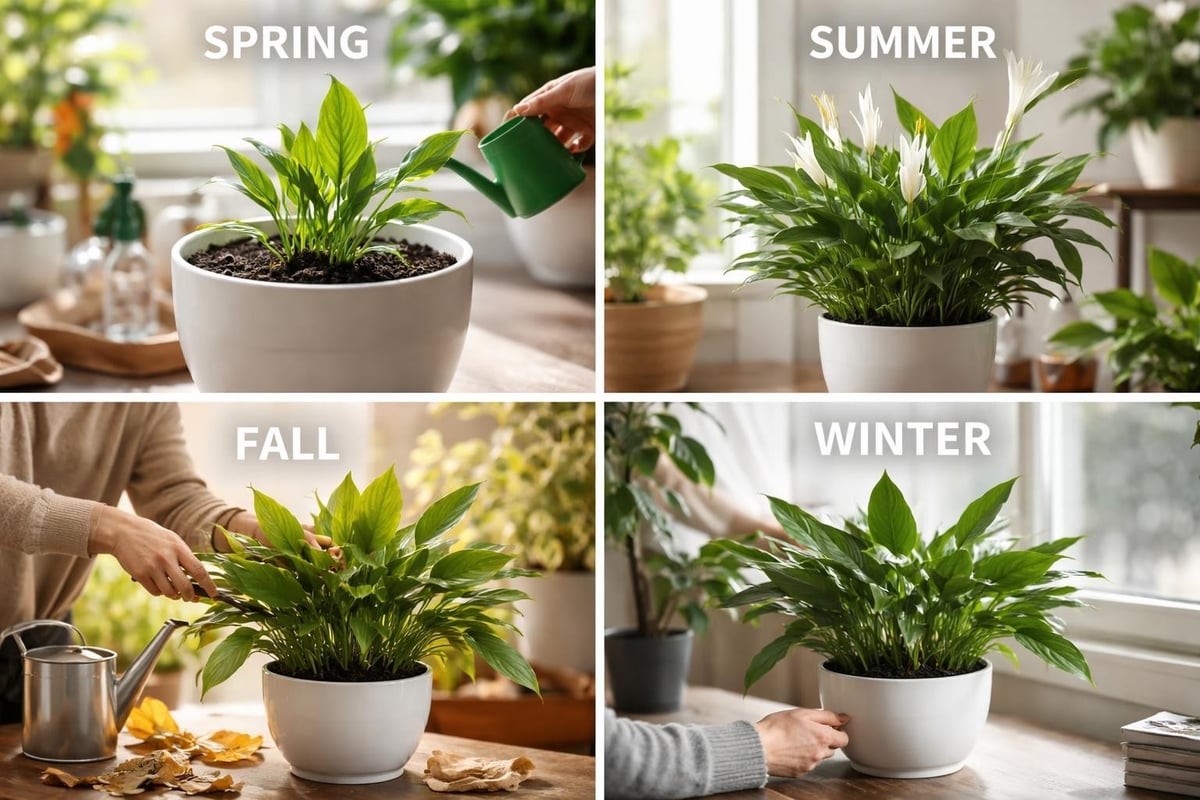
While peace lilies tolerate consistent indoor conditions year-round, subtle seasonal adjustments optimize performance for all varieties.
Spring and Summer Active Growth
Increase watering frequency as plants grow actively and temperatures rise. Feed every 2 to 4 weeks with balanced liquid fertilizer diluted to half strength. This growth period represents the optimal time for repotting, division, or relocating plants to new positions.
Fall and Winter Dormancy
Reduce watering as growth slows and indoor heating lowers humidity. Decrease fertilization to monthly or suspend entirely until spring. Monitor plants for pest issues that intensify in dry winter air, particularly spider mites and mealybugs. Maintaining adequate humidity becomes critical during heating season to prevent brown leaf tips.
| Season | Watering | Fertilizing | Special Considerations |
|---|---|---|---|
| Spring | Increase | Every 2 weeks | Ideal repotting time |
| Summer | Frequent | Every 2 weeks | Monitor for heat stress |
| Fall | Decrease | Monthly | Prepare for dormancy |
| Winter | Reduced | Optional | Increase humidity |
Selecting from the diverse range of peace lily varieties available in 2026 allows you to customize your indoor garden to perfectly match your space constraints, lighting conditions, and aesthetic preferences. Whether you choose compact cultivars for small spaces or dramatic large specimens as living sculpture, these resilient plants reward minimal care with lush foliage and elegant blooms. Divine Roots provides carefully cultivated plants shipped directly from their greenhouse, ensuring you receive healthy specimens ready to thrive in your home. Explore their curated selection of air-purifying plants to find the perfect peace lily variety for your indoor garden.
🌿 Related Reading
- Low Light Indoor Plants
- Air Purifying Indoor Plants
- How to Care for Peace Lily
- How to Care for Calathea
- How to Care for Chinese Evergreen
About the author
Written and reviewed by Robert, Founder of Divine Roots — he grows, propagates and ships the plants we sell, and the care advice here reflects what actually works in our own greenhouse.
Frequently Asked Questions
What are the most common peace lily varieties?
'Mauna Loa' is the classic mid-size houseplant, 'Sensation' is the giant reaching four to six feet, 'Domino' carries white-speckled variegation, and 'Petite' and 'Wallisii' stay compact for desks and shelves. All are Spathiphyllum cultivars and share essentially the same care requirements.
Which peace lily is the largest?
Spathiphyllum 'Sensation' is by far the biggest, growing four to six feet tall with broad, deeply ribbed leaves up to twenty inches long. It makes an excellent floor plant for a bright corner, but needs a heavy pot and considerably more water than compact varieties.
Is there a variegated peace lily?
Yes. 'Domino' is the widely available variegated cultivar, with white streaks and flecks across the green leaves. 'Picasso' carries bolder white sectors but is rare and expensive. Variegated peace lilies need brighter indirect light than plain green types to keep their pattern.
Do different peace lily varieties need different care?
No, care is essentially identical across cultivars: bright indirect light, consistently moist but never soggy soil, humidity above 50 percent, and filtered water. The only practical differences are that larger varieties need more water and bigger pots, and variegated ones need brighter light.
Which peace lily variety flowers the most?
Compact cultivars such as 'Petite' and 'Mauna Loa' bloom most reliably indoors, often several times a year in good light. Large types like 'Sensation' flower less frequently and are grown for foliage. Any peace lily needs bright indirect light to flower well.
Are all peace lily varieties toxic to pets?
Yes. Every Spathiphyllum contains insoluble calcium oxalate crystals that cause mouth irritation, drooling, and vomiting in cats and dogs that chew the leaves. Unlike true lilies they do not cause kidney failure, but they still do not belong within reach of pets.
Share