

Real Olive Tree Indoor Care Guide for Thriving Plants
You can grow a real olive tree indoors, but only in the sunniest position you have — six or more hours of direct sun daily at a south-facing window. Use gritty fast-draining soil in a terracotta pot, water only when the top two inches dry out, and expect foliage rather than fruit without a winter chill period.
Growing a real olive tree indoor has become increasingly popular among plant enthusiasts who want to bring Mediterranean charm into their homes. These elegant trees, traditionally found in sun-drenched groves across Southern Europe, can thrive inside when given proper care and attention. While olive trees naturally prefer outdoor conditions, selecting the right variety and understanding their specific needs makes indoor cultivation both achievable and rewarding. The key to success lies in replicating their natural environment as closely as possible while adapting to the constraints of interior spaces.
Selecting the Right Olive Variety for Indoor Growing
Not all olive trees are suited for indoor environments. Dwarf varieties are essential for maintaining manageable size and ensuring your tree flourishes within the confines of your home.
The most popular cultivars for indoor growing include:
- Arbequina: Compact growth habit, produces small flavorful olives, tolerates pruning well
- Picholine: French variety with attractive silvery foliage, adapts to container life
- Koroneiki: Greek cultivar known for high oil content, stays relatively small
- Little Ollie: Ornamental variety that rarely fruits but offers beautiful foliage
When choosing a real olive tree indoor specimen, consider your goals. Understanding which varieties work best for container growing helps ensure long-term success and prevents disappointment down the line.
Dwarf varieties typically reach heights between three and six feet indoors, making them suitable for most living spaces. Standard olive trees can grow fifteen feet or taller, which becomes impractical for interior cultivation.
Container and Soil Requirements
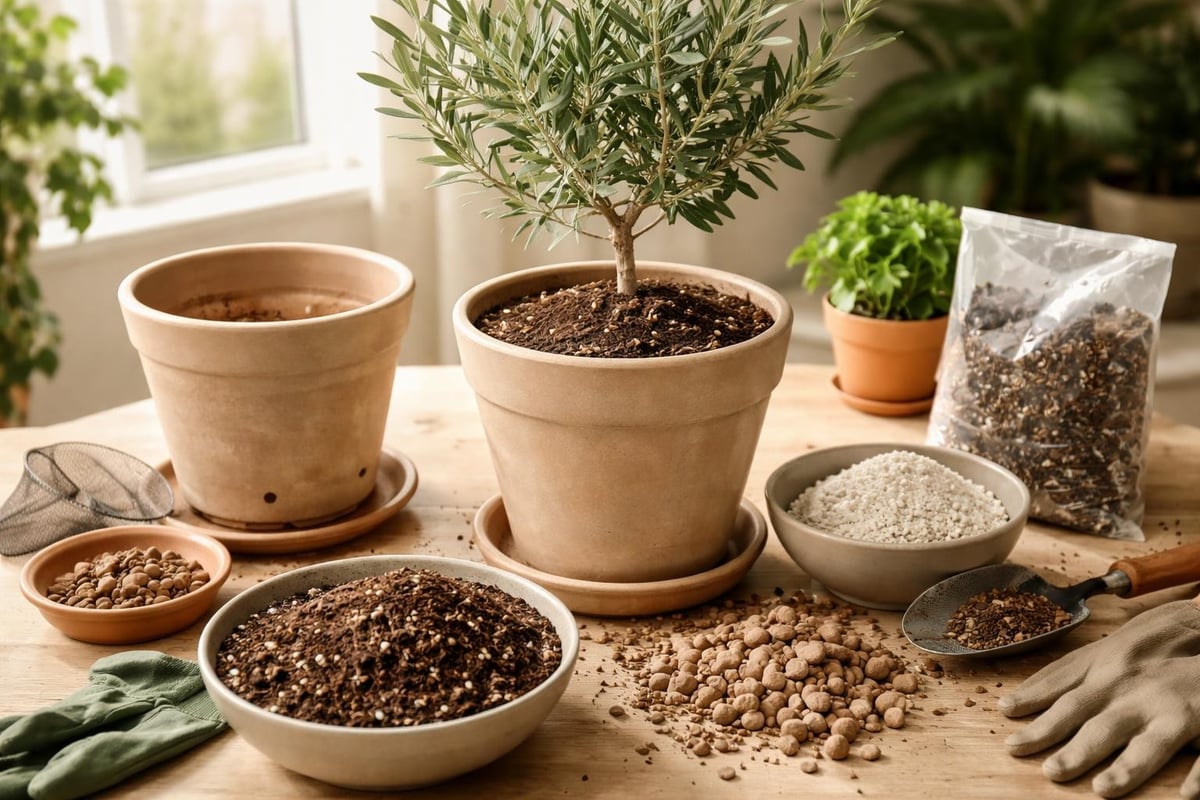
Proper container selection directly impacts your olive tree's health and growth potential. Choose a pot with excellent drainage holes, as olive trees despise waterlogged roots.
| Container Feature | Recommendation | Why It Matters |
|---|---|---|
| Material | Terracotta or ceramic | Allows soil to breathe and moisture to evaporate |
| Drainage | Multiple holes | Prevents root rot and fungal issues |
| Size | 2-4 inches larger than root ball | Provides room for growth without excess moisture |
| Depth | At least 12 inches | Accommodates extensive root systems |
The soil mixture should be well-draining and slightly alkaline. Create an ideal blend by combining:
- 60% quality potting soil
- 20% perlite or pumice
- 20% coarse sand or fine gravel
This combination mimics the rocky, fast-draining soils olive trees prefer in their native habitats. Adding a handful of crushed oyster shells or lime raises pH levels slightly, which olive trees appreciate.
Lighting Requirements for Indoor Olive Trees
Light represents the most critical factor when growing a real olive tree indoor. These Mediterranean natives evolved under intense sunlight and require substantial illumination to photosynthesize effectively.
Minimum light requirements:
- Six to eight hours of direct sunlight daily
- South-facing windows provide optimal natural light
- Unobstructed exposure without curtains or screens
Without adequate light, olive trees exhibit several warning signs:
- Leaf drop: Lower leaves turn yellow and fall off
- Leggy growth: Stems stretch toward light sources with sparse foliage
- Poor vigor: Overall weakness and susceptibility to pests
- No flowering: Insufficient energy for bud formation
During winter months when natural daylight decreases, supplemental grow lights become essential for maintaining health. Expert recommendations for indoor olive care emphasize consistent light exposure throughout the year. Position full-spectrum LED grow lights 12 to 18 inches above the canopy and run them for 12 to 14 hours daily.
Rotating for Even Growth
Rotate your olive tree one-quarter turn weekly to ensure all sides receive equal light exposure. This practice prevents lopsided growth and encourages a balanced, attractive canopy.
Watering Practices and Humidity Control
Understanding watering needs distinguishes successful olive tree cultivation from constant struggle. These drought-tolerant plants prefer a deep watering followed by a drying period rather than frequent light wattering.
The finger test provides reliable guidance:
- Insert your finger two inches into the soil
- Water only when the soil feels completely dry at this depth
- Empty drainage saucers 30 minutes after watering
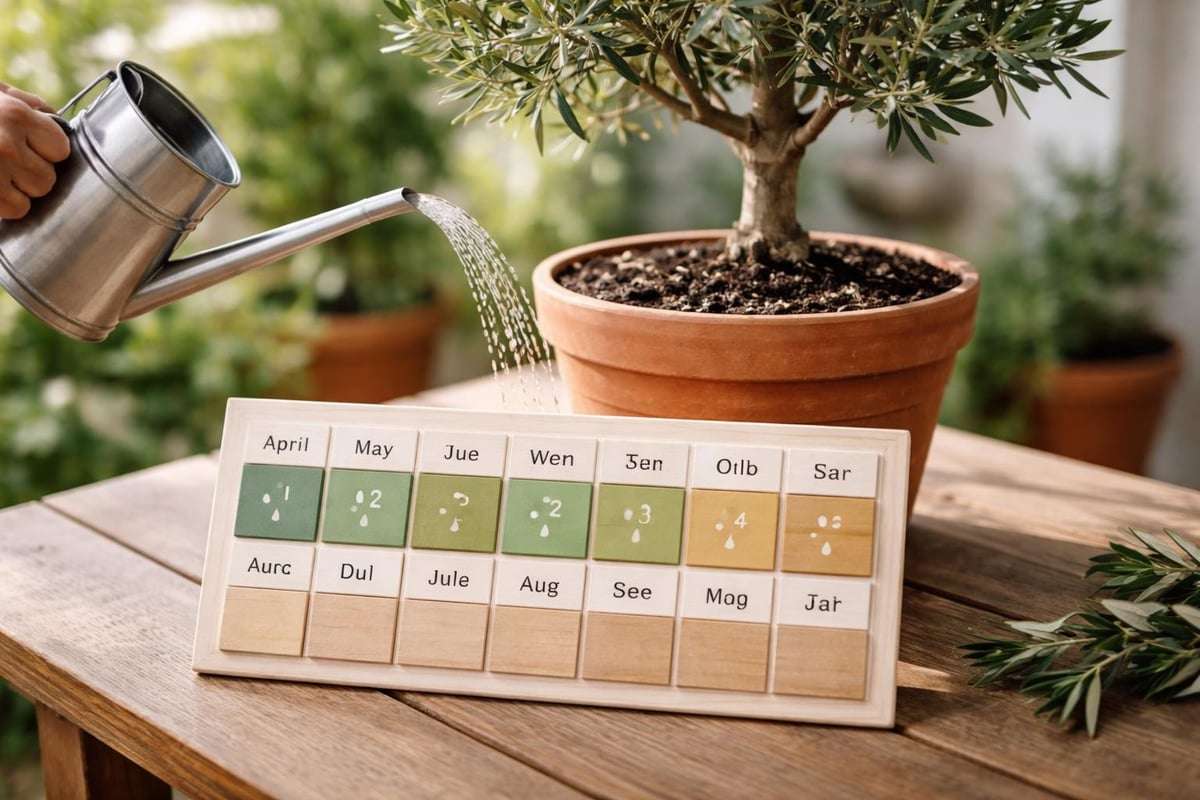
Seasonal watering adjustments prove necessary. During active growth in spring and summer, your real olive tree indoor specimen requires more frequent watering. Winter dormancy reduces water needs significantly, sometimes to once every two to three weeks.
Common watering mistakes to avoid:
- Maintaining constantly moist soil
- Following rigid schedules instead of checking soil moisture
- Using cold tap water directly from the faucet
- Allowing plants to sit in standing water
Room temperature water prevents shocking the root system. Some growers let tap water sit overnight to allow chlorine to dissipate, though most olive trees tolerate municipal water without issue.
Olive trees tolerate low humidity levels better than many indoor plants, making them suitable for typical home environments. Humidity between 40% and 60% supports healthy growth without requiring constant misting or humidifiers.
Temperature and Placement Considerations
Olive trees appreciate moderate temperatures and consistent conditions. Ideal daytime temperatures range from 65°F to 75°F, with nighttime temperatures dropping 5 to 10 degrees lower.
| Season | Temperature Range | Special Considerations |
|---|---|---|
| Spring | 65-75°F | Encourage new growth with warmth |
| Summer | 70-80°F | Can tolerate brief heat spikes |
| Fall | 60-70°F | Prepare for dormancy |
| Winter | 50-60°F | Cool rest period essential for flowering |
Placement away from heating vents, air conditioning units, and drafty windows prevents temperature stress. Sudden fluctuations cause leaf drop and weaken the tree's immune system. Proper placement strategies protect your investment and support consistent growth patterns.
Many growers successfully move their real olive tree indoor specimen outdoors during summer months. This practice exposes the tree to natural conditions, strengthens branches through wind exposure, and often improves overall vigor. Gradually acclimate the tree over seven to ten days to prevent sunburn on leaves adjusted to indoor light.
Before overnight temperatures drop below 50°F in fall, bring the tree back inside using the same gradual approach. Inspect thoroughly for pests before reintroducing it to your indoor space.
Fertilization and Nutrient Management
Regular feeding supports healthy growth and potential fruit production. Olive trees are moderate feeders that benefit from consistent nutrition during the growing season.
Fertilization schedule:
- Early spring: Begin feeding as new growth emerges
- Monthly through summer: Maintain regular applications
- Early fall: Final feeding before dormancy
- Winter: No fertilization during rest period
Use a balanced, water-soluble fertilizer with an NPK ratio of 10-10-10 or similar. Some growers prefer organic options like fish emulsion or seaweed extract. Dilute to half the recommended strength to prevent root burn, as container plants are more sensitive to fertilizer concentration than in-ground specimens.
Understanding proper fertilization timing and techniques maximizes growth potential while preventing nutrient deficiencies. Yellowing leaves with green veins suggest iron deficiency, while overall pale foliage indicates nitrogen needs.
Micronutrients matter too. Trace elements like iron, manganese, and zinc support various metabolic processes. Complete fertilizers designed for citrus or Mediterranean plants typically contain appropriate micronutrient profiles for olive trees.
Pruning and Shaping Your Indoor Olive Tree
Strategic pruning maintains size, encourages bushier growth, and creates attractive form. Real olive tree indoor specimens require annual pruning to remain manageable and healthy.
The best time for major pruning occurs in late winter or early spring before new growth begins. Light maintenance pruning can happen throughout the year as needed.
Pruning objectives:
- Remove dead, damaged, or diseased branches immediately
- Thin interior growth to improve air circulation
- Shape the canopy for aesthetic appeal
- Control overall size within space constraints
- Encourage fruiting wood development
Sterilize pruning shears with rubbing alcohol between cuts to prevent disease transmission. Make cuts at a 45-degree angle just above a leaf node or bud facing the direction you want new growth.
Young trees benefit from training into specific forms. Central leader style creates a Christmas tree shape with one dominant trunk and tiered branches. Open center or vase shape removes the central leader, creating a bowl-like structure that maximizes light penetration.
Avoid removing more than one-quarter of the tree's foliage in a single session. Excessive pruning stresses the plant and reduces its photosynthetic capacity. Similar care principles apply across many easy care plants in your collection.
Pest and Disease Management
Indoor olive trees face fewer pest pressures than outdoor specimens but remain vulnerable to common houseplant insects. Regular inspection catches problems early when they're easiest to address.
Common pests:
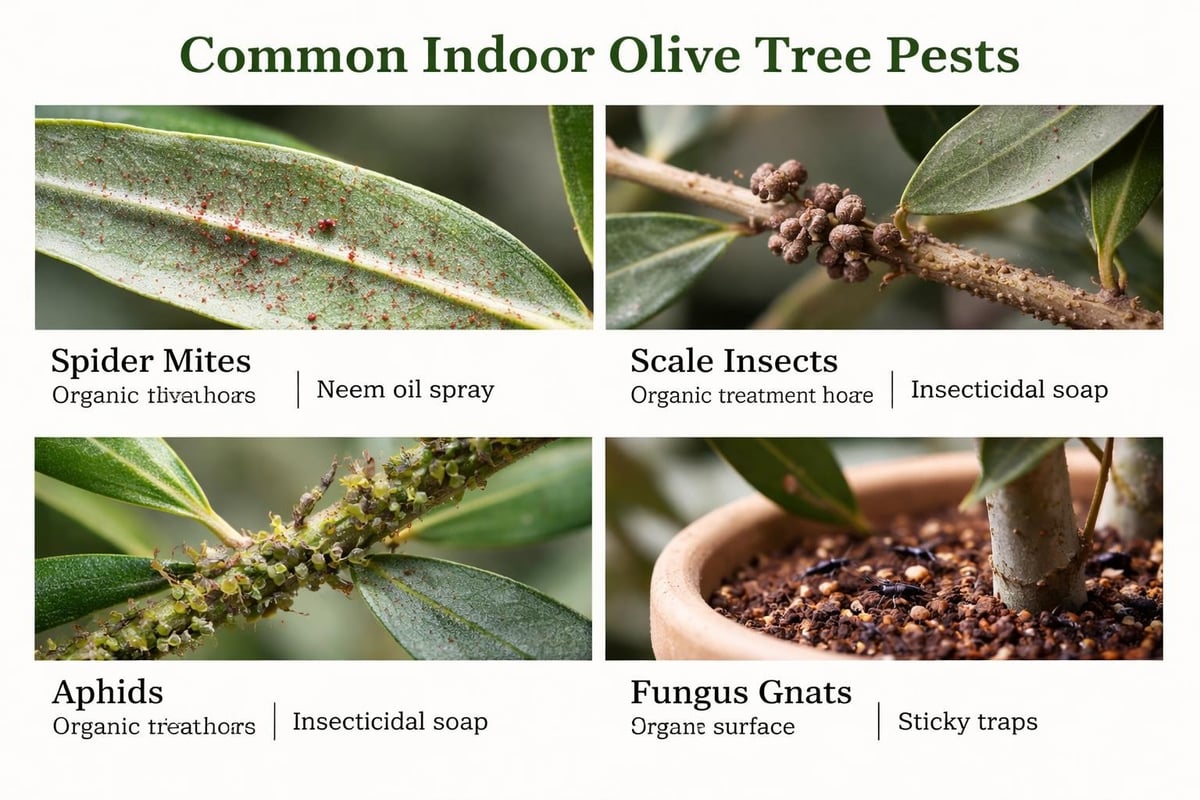
- Spider mites: Tiny arachnids causing stippled leaves and fine webbing
- Scale insects: Brown or white bumps on stems and leaf undersides
- Mealybugs: White cottony masses in leaf axils and branch crotches
- Aphids: Small soft-bodied insects clustering on new growth
Combat these pests through integrated approaches:
- Isolate affected plants immediately
- Spray with strong water jets to dislodge insects
- Apply insecticidal soap or neem oil every five to seven days
- Introduce beneficial insects like ladybugs for biological control
- Maintain plant health to improve natural resistance
Fungal diseases rarely affect well-cared-for indoor olive trees. Root rot from overwatering represents the most serious threat. Symptoms include wilting despite moist soil, yellowing leaves, and musty odor from the root zone. Prevention through proper watering practices proves far easier than treatment.
Flowering and Fruit Production Indoors
Many growers wonder whether their real olive tree indoor plant will produce fruit. While possible, indoor fruiting requires specific conditions and realistic expectations.
Olive trees need vernalization, a period of cool temperatures, to trigger flowering. Winter temperatures between 40°F and 50°F for six to eight weeks satisfy this requirement. Without vernalization, trees may produce beautiful foliage but never flower.
Additional fruiting requirements include:
- Adequate light (minimum 8 hours direct sun)
- Mature age (typically 3-5 years minimum)
- Proper fertilization during growing season
- Hand pollination for fruit set
Even when flowers appear, fruit set remains unpredictable indoors. Outdoor trees benefit from wind and insect pollination, which you must replicate by hand. Use a small paintbrush to transfer pollen between flowers during the blooming period.
Fruiting timeline:
| Stage | Timing | Visual Indicators |
|---|---|---|
| Flowering | Spring | Small white flowers in clusters |
| Fruit set | 4-6 weeks after flowering | Tiny green olives forming |
| Growth | Summer months | Olives enlarging gradually |
| Ripening | Fall/early winter | Color change from green to purple/black |
Fruit production drains significant energy from the tree. Some growers remove developing olives to redirect resources toward foliage growth and overall plant health.
Repotting and Root Management
Container-grown olive trees eventually outgrow their pots and require repotting. Signs indicating repotting needs include roots circling the pot's interior, growth from drainage holes, or water running straight through without absorption.
Repotting frequency: Every two to three years for young trees, every four to five years for mature specimens.
The repotting process:
- Water thoroughly 24 hours before repotting
- Gently remove the tree from its current container
- Inspect roots for rot or damage, pruning as needed
- Select a container 2 to 4 inches larger in diameter
- Add fresh soil mixture to the bottom
- Position the tree at the same depth as previously
- Fill around roots with new soil, eliminating air pockets
- Water thoroughly and place in bright, indirect light for one week
Some experienced growers practice root pruning when size constraints prevent moving to larger containers. This technique involves removing outer portions of the root ball and replanting in the same pot with fresh soil. Root pruning controls size but requires confidence and proper technique.
After repotting, avoid fertilizing for six to eight weeks. Fresh potting mix contains sufficient nutrients, and newly disturbed roots need time to establish before processing additional fertilizer. For more guidance on maintaining healthy plants, explore resources in the plant care blog section.
Troubleshooting Common Problems
Even experienced growers encounter challenges with their real olive tree indoor specimens. Understanding common issues and solutions prevents panic and guides effective responses.
Leaf drop represents the most frequent concern. Causes include:
- Sudden environmental changes
- Insufficient light
- Overwatering or underwatering
- Temperature stress
- Normal seasonal shedding
Olive trees naturally shed older leaves, particularly those shaded by upper canopy growth. Some leaf loss proves normal and expected. Extensive leaf drop signals environmental stress requiring investigation and adjustment.
Yellowing leaves indicate various potential issues:
- Nitrogen deficiency (overall yellowing)
- Iron deficiency (yellowing between green veins)
- Overwatering (yellowing with wilting)
- Natural aging (lower leaves only)
Diagnose by considering recent care practices and examining the pattern of affected leaves. Targeted adjustments address specific causes more effectively than general changes.
Sticky residue on leaves or nearby surfaces indicates insect activity. Many sap-sucking pests excrete honeydew, which feels sticky and may develop black sooty mold. Address the underlying pest problem rather than just cleaning the residue.
Seasonal Care Adjustments
Successful real olive tree indoor cultivation requires adjusting care practices throughout the year. Trees experience natural growth cycles that demand different support during each season.
Spring: Growth resumes as days lengthen and temperatures warm. Increase watering frequency as soil dries faster. Begin monthly fertilization. Prune for shape and size control. Repot if necessary.
Summer: Peak growth period demands consistent moisture and regular feeding. Monitor for pests more frequently as populations increase. Consider moving outdoors for natural conditions. Maximum light exposure supports vigorous growth.
Fall: Growth slows as daylight decreases. Reduce watering frequency. Complete final fertilization by early September. Bring outdoor trees inside before temperatures drop below 50°F. Prepare for winter dormancy.
Winter: Dormancy period requires cool temperatures and reduced care. Water sparingly when soil is completely dry. No fertilization. Maintain bright light with supplemental grow lights. Avoid placing near heat sources. This rest period proves essential for future flowering.
Annual cycles repeat these patterns. Observing your tree's responses and adjusting accordingly develops intuition about its needs. Similar seasonal awareness benefits all plants in your collection, from succulents to larger specimens.
Companion Planting and Display Ideas
While focusing on your olive tree's needs, consider its presentation within your living space. These sculptural trees serve as stunning focal points that anchor interior design schemes.
Display strategies:
- Position as entry statement pieces in foyers
- Anchor conversation areas in living rooms
- Add Mediterranean character to sunrooms
- Create patio transitions in enclosed porches
- Pair with complementary container plants
Companion plants for shared spaces should tolerate similar conditions. Consider grouping your olive tree with:
- Rosemary: Shares Mediterranean origins and care requirements
- Lavender: Tolerates similar light and water needs
- Succulents: Drought-tolerant partners for visual interest
- Citrus trees: Fellow fruit-bearing companions
Container selection enhances visual impact. Terracotta pots complement the tree's Mediterranean heritage, while modern ceramic vessels create contemporary contrast. Elevating containers on plant stands improves drainage and creates dynamic height variations.
Under-planting with shallow-rooted herbs or trailing succulents adds textural interest without competing for resources. Ensure companions don't crowd the olive's root zone or create excessive moisture retention.
Long-Term Success Strategies
Maintaining a thriving real olive tree indoor requires commitment to consistent care and attention to detail. Developing routines and monitoring systems prevents problems and catches issues early.
Success habits:
- Establish weekly inspection routines
- Keep simple care logs tracking watering and fertilization
- Photograph monthly to document growth and identify changes
- Adjust placement seasonally for optimal light
- Maintain realistic expectations about growth rates and fruiting
Patience proves essential. Olive trees grow slowly compared to many houseplants, adding 6 to 12 inches annually under ideal conditions. Focus on steady progress rather than dramatic transformations.
Building knowledge through observation teaches more than any guide. Your specific environment, with its unique light quality, temperature patterns, and humidity levels, creates conditions that require personalized responses. What works for other growers provides valuable frameworks, but your tree communicates its needs through appearance and growth patterns.
Connect with other olive tree enthusiasts through online communities, local plant societies, or botanical gardens. Sharing experiences, troubleshooting challenges collectively, and celebrating successes enriches the growing journey. The broader indoor plant community offers valuable support and inspiration.
Growing a real olive tree indoor brings Mediterranean beauty and sophisticated elegance into your home while challenging you to create optimal conditions for these sun-loving plants. With proper attention to light, water, temperature, and seasonal care adjustments, your olive tree will thrive and become a cherished focal point for years to come. Whether you're expanding your plant collection or seeking that perfect statement piece, Divine Roots offers expertly selected plants and premium planters shipped directly from their greenhouse to ensure your indoor garden flourishes with health and vitality.
Related Guides
- Best grow lights for houseplants
- Best soil for indoor plants
- Growing bougainvillea indoors
- Large indoor plant pots
- Fertilizer guide
- Houseplant pest identification
About the author
Written and reviewed by Robert, Founder of Divine Roots — he grows, propagates and ships the plants we sell, and the care advice here reflects what actually works in our own greenhouse.
Frequently Asked Questions
Can you really grow an olive tree indoors?
Yes, but it needs the sunniest position in the house, ideally six or more hours of direct sun daily at a south-facing window. Olives are Mediterranean sun lovers; in average indoor light they slowly thin out, drop leaves, and decline over a year or two.
Will an indoor olive tree produce fruit?
Rarely. Most olive varieties need a winter chill period below 50°F for around two months to set fruit, which indoor conditions do not provide. Self-fertile dwarf varieties such as 'Arbequina' occasionally fruit indoors, but treat an indoor olive as a foliage plant first.
How often should I water an indoor olive tree?
Water thoroughly once the top two inches of soil are dry, roughly every seven to ten days in summer and every two to three weeks in winter. Olives handle brief drought far better than wet feet, so always empty the saucer and never leave the pot standing in water.
Why is my indoor olive tree dropping leaves?
Leaf drop usually means too little light, overwatering, or a sudden change in position or temperature. Check light first, then feel the soil. Some shedding after you bring a tree home is normal acclimation; steady drop over several weeks points to an unresolved problem.
What soil and pot suit an indoor olive?
Use a gritty, fast-draining mix, such as potting soil cut with a third perlite or coarse sand, in a terracotta pot with generous drainage holes. Terracotta helps the rootball dry out between waterings, which mimics the lean, dry soils olives grow in naturally.
Should I prune my indoor olive tree?
Yes, prune in late winter or early spring to keep the canopy open and the size manageable. Remove crossing branches, suckers from the base, and anything growing inward. Olives tolerate hard pruning well and respond with dense new growth from the cut points.
Share