

Types of Snake Plants: A Complete Guide to Varieties
Snake plants have earned their reputation as one of the most versatile and forgiving houseplants available today. Whether you're looking for a tall statement piece for your living room or a compact variety for your desk, understanding the different types of snake plants helps you make informed decisions for your indoor garden. These architectural beauties offer striking foliage, exceptional air-purifying qualities, and minimal care requirements, making them perfect for both seasoned plant enthusiasts and beginners alike.
Understanding Snake Plant Classification
The botanical world recently reclassified snake plants from the Sansevieria genus to Dracaena, though many plant lovers still refer to them by their former name. This change reflects new genetic research, but it doesn't alter the incredible diversity within the group. With over 70 recognized species and countless cultivars, the variety of leaf patterns, colors, and growth habits continues to expand.
What distinguishes different snake plant types includes:
- Leaf shape and arrangement (flat, cylindrical, or rosette)
- Color variations and variegation patterns
- Mature height and growth rate
- Native habitat and cold hardiness
Snake plants originated in tropical West Africa, adapting to survive drought conditions and varying light levels. This evolutionary background explains their remarkable resilience in modern homes. When browsing options from collections like Divine Roots' indoor plants, you'll notice these adaptations translate to low-maintenance care requirements.
Tall and Architectural Varieties
Sansevieria Trifasciata (Mother-in-Law's Tongue)
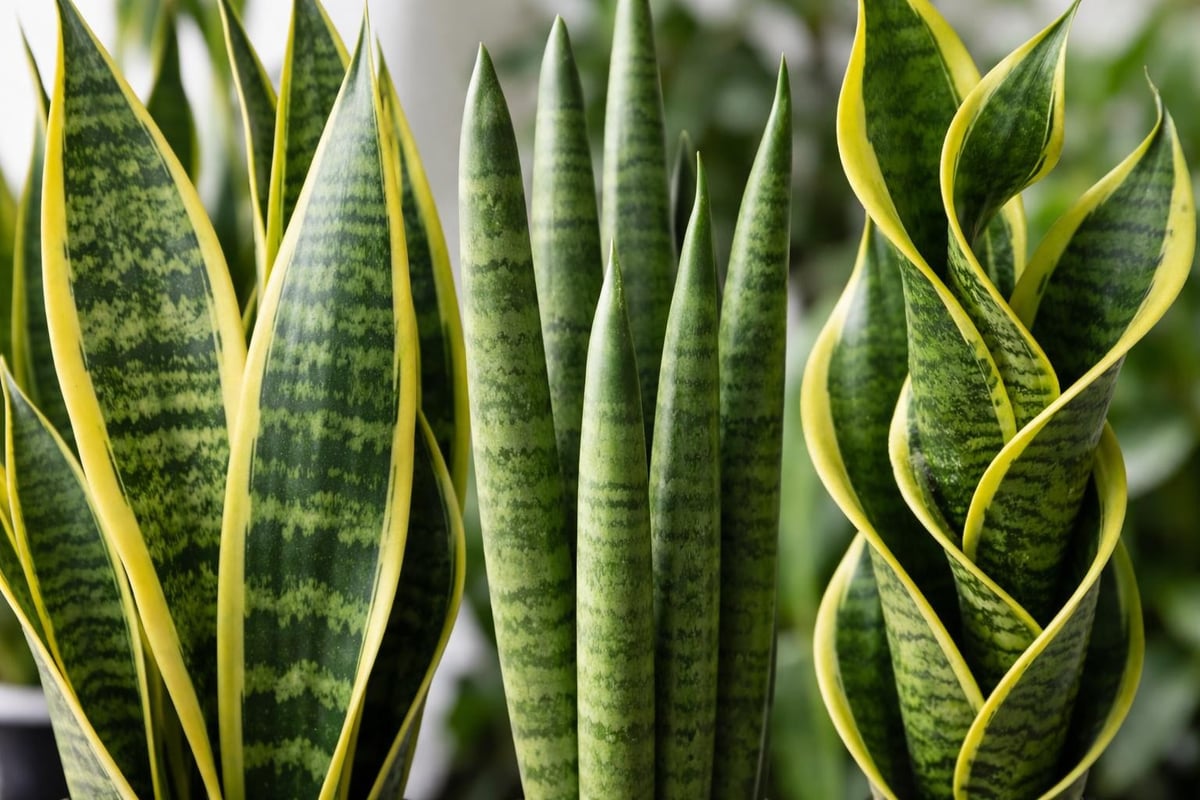
The classic Dracaena trifasciata remains the most recognized among types of snake plants. Its sword-shaped leaves grow upright, reaching heights of three to four feet in optimal conditions. The deep green leaves display distinctive horizontal gray-green bands that resemble snake skin, inspiring the plant's common name.
This variety thrives in a range of lighting conditions, from bright indirect light to low-light corners. The robust nature makes it ideal for offices, bedrooms, and living spaces where maintenance time is limited. Divine Roots customers appreciate this variety for its ability to anchor room designs while purifying indoor air.
Sansevieria Zeylanica (Ceylon Bowstring Hemp)
Zeylanica offers a wilder appearance compared to its cousin trifasciata. The leaves display more irregular variegation with darker green tones and lighter silvery-green patterns. This variety grows slightly narrower than Mother-in-Law's Tongue, making it perfect for tighter spaces.
Historical records show that various snake plant species were used to produce bowstring fiber in their native regions. The Zeylanica specifically earned its common name from this traditional use in Ceylon (modern-day Sri Lanka).
Sansevieria Laurentii
Distinguished by bright yellow margins framing green-banded centers, Laurentii ranks among the most sought-after types of snake plants for decorative purposes. The golden edges add warmth to any room, complementing both modern and traditional décor schemes.
Key characteristics include:
- Height potential of 3-4 feet
- Slower growth rate than non-variegated varieties
- Higher light requirements to maintain yellow edges
- Propagates through division to preserve coloration
Compact and Dwarf Varieties
Sansevieria Hahnii (Bird's Nest Snake Plant)
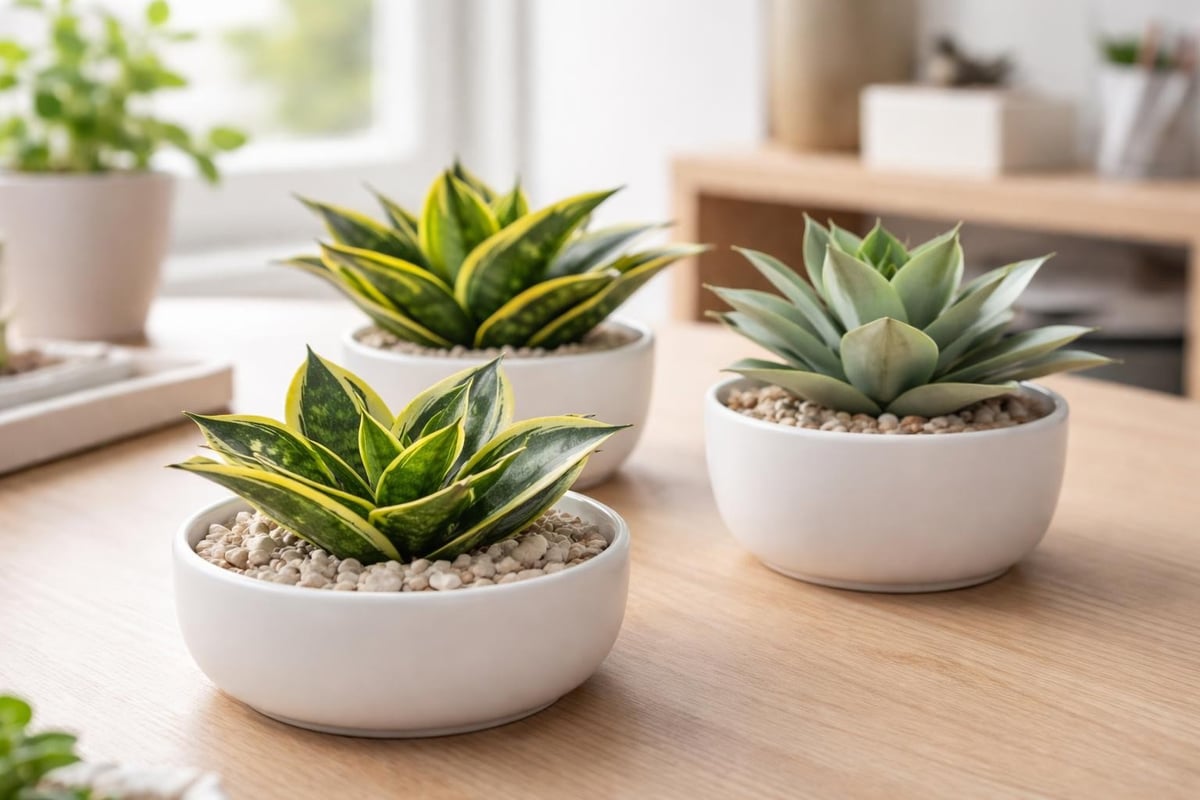
The Hahnii cultivar revolutionized snake plant design with its compact rosette formation. Instead of growing tall and upright, these types of snake plants form low, nest-like clusters that rarely exceed eight inches in height. The shortened leaves fan outward in an attractive pattern.
Multiple color variations exist within the Hahnii group, including Golden Hahnii with yellow-striped leaves and Silver Hahnii with silvery-gray variegation. These miniature versions excel as desk plants, bathroom accents, or grouped arrangements on shelving units.
| Variety | Height | Light Needs | Best Location |
|---|---|---|---|
| Hahnii Green | 6-8 inches | Low to bright | Desks, shelves |
| Golden Hahnii | 6-8 inches | Medium to bright | Well-lit tables |
| Silver Hahnii | 6-8 inches | Low to medium | Bathroom, bedroom |
Sansevieria Trifasciata Twisted Sister
This playful cultivar features leaves that spiral and twist as they grow, creating dynamic visual interest. The compact size (10-15 inches) and unique growth pattern make Twisted Sister perfect for smaller spaces where you want personality without overwhelming scale.
The yellow-edged variegation adds brightness, while the twisted foliage creates shadows and depth. When selecting from easy care plants, this variety delivers maximum impact with minimal effort.
Cylindrical and Unique Leaf Shapes
Sansevieria Cylindrica (African Spear)
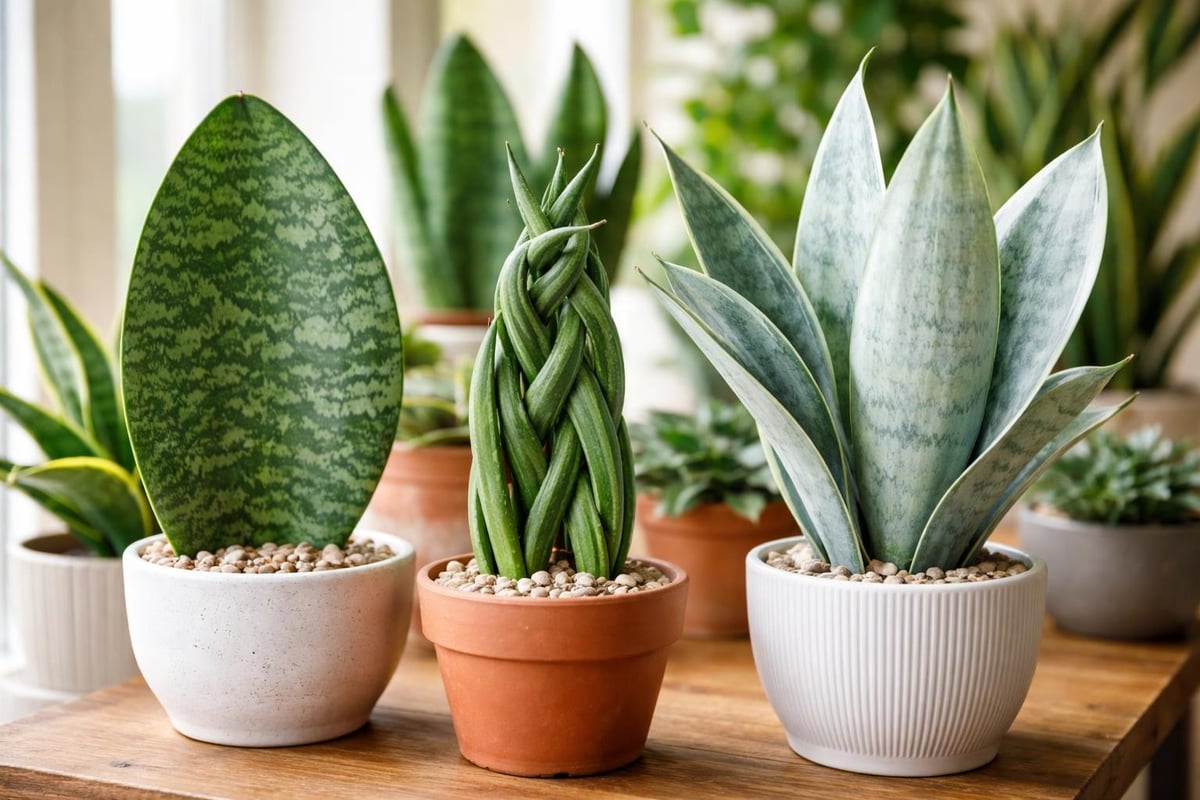
Dracaena angolensis, commonly known as cylindrical snake plant, breaks the mold with round, spear-like leaves instead of flat blades. These smooth, striped cylinders grow upright from the soil, creating an architectural statement unlike other types of snake plants.
Creative growers often braid young cylindrica leaves or arrange them in geometric patterns. The unusual form makes this variety conversation-worthy while maintaining the genus's legendary toughness. Mature specimens can reach 4-6 feet, though growth remains slow and manageable.
Sansevieria Bacularis (Mikado)
Resembling a collection of green pencils emerging from soil, Bacularis presents an extremely narrow, cylindrical leaf structure. The leaves grow more densely than cylindrica, creating a fuller appearance despite individual leaves measuring less than half an inch in diameter.
This variety suits contemporary minimalist décor particularly well. The vertical lines draw the eye upward, making rooms feel taller while occupying minimal floor space.
Variegated and Colorful Selections
Sansevieria Moonshine
Moonshine captivates with its silvery-blue foliage that almost glows in certain lighting. The broad, pale leaves display subtle darker green margins and minimal horizontal banding. Among colorful types of snake plants, Moonshine offers the most dramatic departure from traditional green tones.
The lighter coloration requires slightly more light than darker varieties to maintain its signature appearance. However, it still tolerates lower light better than most houseplants. Pair Moonshine with darker-leaved plants for striking contrast in grouped displays.
Moonshine care highlights:
- Provide bright, indirect light for best color
- Allow soil to dry completely between waterings
- Fertilize sparingly during growing season
- Wipe leaves monthly to maintain luminous appearance
Sansevieria Golden Flame
This stunning cultivar features vibrant yellow-gold variegation that radiates from the center of each leaf. The color intensity varies based on light exposure and growing conditions. New growth often displays the brightest coloration before gradually developing deeper green tones.
Golden Flame represents selective breeding efforts to create ornamental types of snake plants with exceptional visual appeal. When grown in bright light, the golden tones intensify, creating a warm focal point in any plant collection.
Sansevieria Black Gold
Dark green leaves edged with bright golden-yellow margins define Black Gold's bold appearance. The strong contrast creates graphic impact, especially when backlit or positioned against light-colored walls. This variety maintains moderate height (2-3 feet) and tolerates various indoor conditions.
The color retention in Black Gold surpasses many variegated varieties. Even in lower light, the yellow margins persist, though they may narrow slightly compared to brightly-lit specimens.
Rare and Specialty Types
Sansevieria Masoniana (Whale Fin)
Whale Fin snake plant produces enormous single leaves that can reach three feet in length and eight inches in width. The paddle-shaped foliage displays mottled dark and light green patterns, resembling abstract artwork. Only one or two leaves typically grow from each rhizome, creating a sculptural presence.
This remains one of the most expensive and sought-after types of snake plants due to slow growth and limited propagation. The dramatic scale makes single specimens statement pieces that anchor entire room designs.
Sansevieria Francisii
One of the rarest varieties, Francisii produces thick, rough-textured leaves arranged in dense rosettes. The leaves curve inward slightly and display muted green coloring with reddish-brown margins. Native to Kenya, this species tolerates drier conditions than most snake plants.
Collectors prize Francisii for its unique appearance and scarcity in cultivation. The compact growth habit (12-18 inches) suits container culture perfectly.
Sansevieria Ehrenbergii (Blue Sansevieria)
Also called Samurai Dwarf, this variety showcases powder-blue coloring on short, fan-shaped leaves. The blue-gray tones provide cooling visual contrast in warm-toned interiors. The compact rosettes multiply readily, forming attractive clusters over time.
Selection Considerations for Your Space
Choosing among types of snake plants depends on several practical factors beyond aesthetic preferences. Understanding your specific environment ensures long-term success and satisfaction with your selection.
Evaluate these space factors:
- Available floor or shelf space (vertical and horizontal)
- Natural and artificial light sources
- Temperature ranges and climate control
- Proximity to pets or children
- Maintenance commitment level
Snake plants earn recognition among air-purifying plants for their ability to remove toxins while releasing oxygen at night. The health benefits of snake plants include improved air quality and potential reduction in airborne allergens. However, the plants contain mild toxins, so households with curious pets should explore pet-friendly options instead.
Light availability significantly impacts variety selection. While all snake plants tolerate low light better than most houseplants, variegated types maintain their distinctive coloring best in brighter conditions. Dark green varieties like Zeylanica thrive even in dim corners, making them ideal for low-light plants collections.
Growth Patterns and Propagation Methods
Different types of snake plants exhibit varying growth rates and multiplication patterns. Most varieties spread through underground rhizomes, gradually producing new shoots called pups. This clumping growth creates fuller displays over time without requiring replanting.
| Propagation Method | Success Rate | Time to Root | Best Varieties |
|---|---|---|---|
| Division | Very High | Immediate | All types |
| Leaf Cuttings | Moderate | 4-8 weeks | Non-variegated |
| Rhizome Sections | High | 2-4 weeks | Cylindrica, Bacularis |
| Water Propagation | Moderate | 3-6 weeks | Trifasciata, Zeylanica |
Division remains the most reliable propagation method across all types of snake plants. Simply separate established clumps during repotting, ensuring each division includes roots and at least one growing point. This method preserves variegation in cultivars like Laurentii and Golden Flame, which often revert to solid green when grown from leaf cuttings.
The Epic Gardening guide to snake plant varieties provides detailed propagation instructions for specific cultivars. Understanding these differences helps expand your collection economically while maintaining desired characteristics.
Seasonal Care Adjustments
Though renowned for resilience, types of snake plants benefit from minor seasonal care adjustments that align with their natural growth cycles. Spring and summer mark active growing periods when plants appreciate occasional fertilization and more frequent watering. Fall and winter signal dormancy, requiring reduced water and no fertilization.
Spring and summer care (March-September):
- Water when top two inches of soil dry
- Apply diluted fertilizer monthly
- Increase humidity slightly if desired
- Monitor for new growth and pups
Fall and winter care (October-February):
- Reduce watering frequency by half
- Suspend all fertilization
- Maintain consistent temperatures above 50°F
- Avoid cold drafts near windows
Temperature tolerance varies slightly among types of snake plants based on their native habitats. Most varieties handle typical household temperatures (60-85°F) without stress. Brief exposure to cooler temperatures (down to 50°F) won't cause damage, but extended cold periods may lead to leaf discoloration or growth stunting.
Container and Soil Requirements
Proper container selection significantly impacts snake plant health and longevity. These plants prefer snug pots rather than oversized containers, as excess soil retains moisture that can lead to root rot. Terracotta and ceramic pots with drainage holes provide ideal conditions for most types of snake plants.
The growing medium should prioritize drainage over water retention. Standard potting soil often holds too much moisture for snake plant roots. Creating or purchasing a specialized mix ensures success across all varieties.
Ideal soil composition:
- 50% standard potting soil or cactus mix
- 30% perlite or pumice for aeration
- 20% coarse sand for drainage
This well-draining mixture prevents the waterlogged conditions that cause root issues. When repotting becomes necessary (typically every 3-5 years), increase pot size by only one or two inches in diameter. The root-bound preference of snake plants means they actually thrive when slightly constrained.
Consider matching container aesthetics to specific varieties. Tall, architectural types of snake plants like trifasciata and cylindrica suit modern, minimalist planters that won't compete visually. Compact varieties like Hahnii look charming in decorative bowls or grouped arrangements with complementary plants.
Common Challenges and Solutions
Despite their reputation for indestructibility, snake plants occasionally face issues that affect appearance and vitality. Recognizing problems early and understanding their causes allows for quick intervention and recovery.
Root rot develops from overwatering or poorly draining soil. Symptoms include soft, mushy leaves at the base and yellowing foliage. Prevention beats treatment, so water only when soil dries completely. If rot occurs, remove affected portions, repot in fresh soil, and reduce watering frequency.
Brown leaf tips typically indicate inconsistent watering, fluoride in tap water, or fertilizer buildup. Switch to filtered or distilled water if your tap water contains high fluoride levels. Flush soil periodically to remove accumulated salts from fertilizers.
Wrinkled leaves signal severe dehydration. While types of snake plants tolerate drought, extended periods without water cause cellular damage. Resume regular watering gradually, and the plant should recover within several weeks.
Pest infestations occur rarely but may include spider mites or mealybugs. Inspect leaf bases and soil surfaces regularly. Treat infestations with insecticidal soap or neem oil applications according to product directions.
Understanding habitat origins for houseplant care helps prevent many common problems by replicating natural growing conditions.
Decorative Applications and Design Tips
The architectural qualities of various types of snake plants make them valuable design elements beyond simple houseplant status. Interior designers frequently specify snake plants for their ability to add vertical interest, fill empty corners, and complement diverse décor styles.
Floor placement strategies:
- Position tall varieties in corners to soften hard angles
- Flank furniture pieces with matching specimens for symmetry
- Use cylindrica or trifasciata as natural room dividers
- Create height variation by grouping different-sized varieties
Elevated display options:
- Showcase compact varieties on floating shelves
- Arrange Hahnii types in grouped planters at varying heights
- Display Whale Fin as a sculptural centerpiece on console tables
- Feature variegated varieties where they receive ambient light
Color coordination between plant varieties and interior finishes creates cohesive spaces. Silver-toned Moonshine complements cool gray palettes, while Golden Flame and Laurentii warm up neutral rooms. For those building diverse collections, browsing all plants at Divine Roots provides inspiration for complementary combinations.
Snake plants also excel in commercial settings like offices and reception areas. Their minimal care requirements and professional appearance make them practical choices for businesses. The 10 popular types detailed by BuyAnyFlowers offers additional selection guidance for commercial applications.
Building Your Snake Plant Collection
Starting a collection of different types of snake plants rewards enthusiasts with incredible diversity from a single genus. The learning curve remains gentle since care requirements stay consistent across varieties, allowing collectors to focus on acquiring interesting specimens rather than mastering complex care routines.
Collection building strategies include:
- Start with classic trifasciata to master basic care
- Add compact varieties for small-space displays
- Incorporate colorful cultivars for visual interest
- Seek rare varieties to challenge growing skills
- Propagate favorites to expand and share
Local plant shops, specialty nurseries, and online retailers like Divine Roots provide access to both common and unusual varieties. Best-selling plants often include popular snake plant varieties that newcomers appreciate for reliability and availability.
Trading with other collectors opens doors to rare cultivars that rarely appear in commercial markets. Online plant communities facilitate these exchanges, connecting enthusiasts worldwide who share divisions and cuttings. This approach builds collections economically while fostering connections with fellow plant lovers.
Document your collection with photos and care notes. Tracking growth rates, propagation success, and seasonal responses helps refine care techniques and identify favorite performers. Over time, these records become valuable references for troubleshooting and planning future acquisitions.
The remarkable diversity among types of snake plants ensures perfect matches for every indoor environment and design preference. From towering architectural statements to compact desktop companions, these resilient plants deliver beauty and air purification with minimal demands on your time and attention. Whether you're just beginning your plant journey or expanding an established collection, Divine Roots offers carefully selected specimens shipped directly from their greenhouse to your door, ensuring you receive healthy, thriving plants ready to enhance your space for years to come.
Related Guides
- Complete snake plant care guide
- Cylinder snake plant care
- Golden snake plant care
- Snake plant watering guide
- Best low-light houseplants
- Best indoor plants for beginners
- How to propagate houseplants
About the author
Written and reviewed by Robert, Founder of Divine Roots — he grows, propagates and ships the plants we sell, and the care advice here reflects what actually works in our own greenhouse.
Frequently Asked Questions
How many types of snake plant are there?
There are around seventy recognised species, plus dozens of named cultivars, all now classed in the genus Dracaena after being moved from Sansevieria. Only a dozen or so appear commonly in shops, including Laurentii, Zeylanica, Moonshine, Cylindrica, Black Coral, and the compact Hahnii bird's nest types.
What is the most common snake plant variety?
Dracaena trifasciata 'Laurentii', the tall green variety with bold yellow leaf margins, is the most widely sold. 'Zeylanica' with wavy grey-green banding and no yellow edge comes a close second, and the small rosette-forming 'Hahnii' dominates the desk-plant and terrarium market.
Which snake plant stays small?
'Hahnii' bird's nest types stay under a foot tall and form a tight rosette, making them the best choice for shelves and desks. 'Futura Superba' and 'Golden Hahnii' are also compact. Laurentii, Zeylanica, and Cylindrica all climb well past three feet given time.
Do all snake plant varieties have the same care needs?
Essentially yes. Every variety wants bright indirect light, gritty free-draining soil, and thorough watering only once the soil is completely dry. Variegated types such as Laurentii and Moonshine hold their colour better in brighter light, and heavily variegated plants grow noticeably more slowly.
Which snake plant is best for low light?
Plain green forms such as 'Zeylanica' and green Hahnii cope best with low light, because they have more chlorophyll and nothing to lose in variegation. All snake plants merely tolerate low light rather than enjoy it: growth slows to a crawl and overwatering risk rises sharply.
Are all types of snake plant toxic to pets?
Yes. Every snake plant variety contains saponins that cause drooling, vomiting, and diarrhoea in cats and dogs. Toxicity does not vary by cultivar, so if you have determined chewers, keep any snake plant elevated or choose a genuinely pet-safe houseplant instead.
Share